Aims and Scope
Editorial Board
Contacts + Address
Referee
Indexing
Rivista di Psicoterapia Relazionaleviale - Info: Regina Margherita 269 - 00198 - Roma. Tel. 06.8542130; fax 06.8542006; e-mail: rivi-stapr@gmail.com
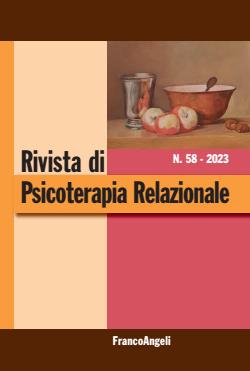
The Rivista di Psicoterapia Relazionale (Journal of Relational Psychotherapy) is published since 1995, and from the very beginning its main goals were to draw the readers’ attention on the emerging themes of psychotherapy, as well as on the specific clinical application of rela-tional and systemic perspectives in understanding and treating individual and family prob-lems. In these years, the path of the journal has been parallel with the evolution of systemic and family therapy nationally and internationally wide, acknowledging the seminal contribution of the most renown family therapy pioneers, as Mara Selvini Palazzoli, Carl Whitaker, Jay Ha-ley, Virginia Satir, Salvador Minuchin, Carlos Sluzki, Nathan Ackerman, James Framo, and oth-ers. The theoretical background is the epistemology derived from System Theory, and Com-plexity Theory, following the developments of Ludwig von Bertalanffy, Humberto Maturana, Francisco Varela, Heinz von Foerster and, above all, the influence of Gregory Bateson’s think-ing. The adoption of a complexity perspective as well as of a multiple levels of analysis has been essential in covering vast and controversial issues like the cultural and psychological changes the families and couples went through in the last decades, the development of new forms of family organizations, the critical relational interface with multicultural aspects and social con-flicts. Confrontation with other perspectives and disciplines has been another way to preserve coherence with the complexity model. Similarly, the choice of accepting contributions of prominent authors that share a critical position toward the complexity model has been adopt-ed to expand the boundaries of the discipline. On the other hand the Journal regularly consid-er the contribution of young authors that could bring novelty and renovation, as well as intro-duce critics and debate. A special section of the Journal is dedicated to RESEARCH, with the aim to implement the readers’ interest in the most advanced and evidence based studies in the field of systemic therapies. The other important section is the one of CLINICAL CASE REPORT that emphasizes the central role of clinical practice, with a peculiar interest either in unusual clinical situation or new methods and approaches. The Rivista di Psicoterapia Relazionale can be considered original in the systemic and rela-tional scientific journals’ panorama because of a peculiar attention devoted to select papers and authors that can demonstrate a rigorous coherence between the System and Complexity Theory principles and its clinical applications, with a specific emphasis on:1) Complexity in the paper contents, that go from problems and illnesses connected with individual, as well as families and broader socio-cultural factors.2) Complexity in the analysis of the critical dimensions that include theoretical aspects, but never neglecting research and clinical practice results.3) Confrontation and dialogue with other perspectives, in order to discover common ma-trices and epistemological differences.4) Attention paid to different therapeutic and non-therapeutic contexts (family therapy, psychoeducational approaches, work and school systems, hospitals, public mental health agencies, therapeutic communities, private practice, and so on), to test in differ-ent settings the model applicability and coherence.The Rivista di Psicoterapia Relazionale is a completely double blind peer-reviewed jour-nal. The journal invites quality clinical and research papers that present original approaches to the intervention with couples, families and other natural systems. The scope of the journal encompasses the broad area of System Theory, Complexity Theory applied to psychology, psychiatry, and related sciences, as a way to investigate human behavior, mental health and their distresses as well as their care and treatment.Couples and Family Psychotherapy are the central focus of the journal, but original re-search, specific case reports and high-quality review articles, are regularly considered for publication.The objectivity and quality of the Journal’s contents is guaranteed by the wide representation and independence of the editorial board which is composed by psychologists, psychiatrists, psychotherapist and researchers covering the main topics directly or indirectly related to sys-temic psychotherapy and investigation.Papers’ acceptance or refusal are communicated to the authors’ within a maximum time of 60 days from the day of the paper’s reception.
Editor in Chief: Camillo Loriedo Vice Editor:<7strong> Chiara Angiolari. Editorial Board:Adriana De Francisci, Danilo Solfaroli Camillocci, Claudio Eliseo, Giovanni Madonna, Lorenzo Polli, Luigi Schepisi, Wilma Trasarti Sponti, Enrico Visani. Scientific Committee: Antonella Bozzaotra, Danilo Solfaroli Camillocci, Francesco Canevelli, Adriana De Francisci, Silvia Di Giuseppe, Claudio Eliseo, Anna Loi, Sergio Lupoi, Giovanni Madonna, Carmelo Pane-bianco, Lorenzo Polli, Luigi Schepisi, Wilma Trasarti Sponti, Francesca Tarantini, Enrico Visa-ni. Scientific Committee Sections:Vittorio Cigoli (Research Section), Wilma Sponti Trasarti (Clinical Case Report Section) Editorial Office: Barbara Maggiore (Secretary), Elena Pellegrini (Graphic), Barbara Maggiore (Graphic and Page layout) Lavinia Gentile (Editorial Assistant) Anna Maria Rapone (Image Editorial Assistant)
La Rivista utilizza una procedura di referaggio doppiamente cieco (double blind peer review process), i revisori sono scelti in base alla specifica competenza. L’articolo verrà inviato in forma anonima per evitare possibili influenze dovute al nome dell’autore. La redazione può decidere di non sottoporre ad alcun referee l’articolo perché giudicato non pertinente o non rigoroso né rispondente a standard scientifici adeguati. I giudizi dei referee saranno inviati all’autore anche in caso di risposta negativa.The Journal uses a double-blind peer review process. Reviewers are chosen for their expertise. The article will be sent anonymously to reviewers to avoid possible influences due to the name of the author. The editors may decide not to submit the article to any referee in the case it is judged as not relevant, not rigorous or not meeting appropriate scientific standards. Reviewers' evaluations will be sent to the author also in case of negative response.
FrancoAngeli is fully aware of the importance to ensure the long-term survival of Web-based scholarly publications for the benefit of the greater global research community.
We are member of
Clockss e Portico, two institutional initiatives born with the aim to ensure the enduring usability, authenticity, discoverability, and accessibility of content over the very long-term.
Info:
Home - CLOCKSS;
Publishers – Portico.