RISULTATI RICERCA

La ricerca ha estratto dal catalogo 105742 titoli

Thaiane Cristino de Souza, Willian Carlos Barreto Luzini, Haroldo De Sá Medeiros, Carlos André da Silva Muller, Otacílio Moreira de Carvahho Costa, Mariluce Paes de Souza

Credit granting and rural producers’ default in Rondônia, Brazil

Economia agro-alimentare

Fascicolo: 3 / 2025

This article aims to examine the scenario of credit granting and default among rural producers in the state of Rondônia between the years 2020 and 2024. The research is quantitative and descriptive, based on secondary data and document analysis concerning the management and operations of Banco da Amazônia (Bank of the Amazon) related to the Constitutional Fund for Financing the North (FNO). The results show that approximately 4.5 billion reais and 16,689 loans were granted during the period under study, of which 9,239 were allocated for operating expenses and 5,116 for investment purposes. It was found that default rates are low, since only 282 contracts (1.69% of the total) had overdue installments. It is also noteworthy that 10 municipalities in Rondônia, out of a total of 52, concentrate 48.48% of the credit contracts and 62.75% of the total credit amount granted. The study concludes that rural credit provides producers with resources to finance their activities and invest in infrastructure, innovation, and technology, enabling them to increase production, productivity, employment, and income, as well as improve living conditions in rural areas. These findings contribute to the understanding of the dynamics of rural credit allocation and default, providing insights for future research and for policies aimed at improving the rural credit system in the state.

Rossella Delfino

Credit institutions and state aids in EC law

ECONOMIA E DIRITTO DEL TERZIARIO

Fascicolo: 1 / 2002

This article is aimed at providing a brief overview on the impact of State aids on the pursuit of business by credit institutions by briefly describing the most recent and relevant EC Commission policies and decisions on the matter. As it is known, credit institutions, whether publicly or privately owned, are subject to EC competition rules, including State aid rules. The need to meet the strict requirements imposed by the EC banking Directives, which has lately constituted the main reason for the grant of public financing to credit institutions, does not exempt the credit business from the application of the rules on State aids which are contained in the EC Treaty. In the 1990s the coming into force of the banking Directives, together whit the achievement of the internal market and the gradual introduction of the economic and monetary union, have imposed on the credit institutions the need hoth to observe strict banking law requirements and to improve their competitiveness in a broader market. In order to meet these challenges, some European Member States have therefore resorted to granting aids to their credit institutions. The said aids were aimed either at keeping the banks concerned in business and competitive or at favouring their restructuring and final privatisation. As it appears obvious from the Commission decisions on State aids to credit institutions which will be examined in this article, any direct or indirect aid may have a significant impact on the pursuit of business by the credit institution, in particular on the preservation of the conditions for its authorisation, on the expansion or reduction of its activities, and on its competitiveness in the European market. Therefore the control over overt and covert State aids to credit institutions represents for the European Commission a significant and challenging task.

Il presente lavoro prende in esame, con una prospettiva di analisi economico-aziendale, il ruolo del mercato del credit reporting nell’esercizio della funzione creditizia delle banche, nonché il vario articolarsi delle scelte di make-or-buy informativo nella catena del valore dell’intermediazione creditizia, tra approcci di relazione di clientela di tipo relationship banking e transaction banking. In particolare, il lavoro è volto a sistematizzare le teorie ed a comprendere le determinanti del ricorso delle banche al mercato dell’informazione creditizia. Il paper è strutturato nel modo seguente. La sezione 2 introduce il tema dell’economia dell’informazione nel mercato creditizio. La sezione 3 accoglie una review della letteratura sul ruolo del credit information market. Nella sezione 4 si analizzano le tipologie di information providers operanti nel mercato dell’informazione creditizia. Nella sezione 5 è preso in esame il contenuto informativo dei report creditizi. Nella sezione 6 si indagano le scelte di de-integrazione verticale dell’attività di intermediazione creditizia. La sezione 7 analizza lo sviluppo del mercato del credit reporting nell’esercizio della funzione creditizia degli intermediari bancari. Osservazioni conclusive sono formulate nell’ultima sezione.

Raya U. Gulimbetova, Nazira A. Gumar, Abdizhapar Dz. Saparbayev, Munira Ya. Imramzieva, A. Kabdeshova

Credit technologies of banks as a mandatory component of the economic development and financial wellbeing in the Republic of Kazakhstan

RIVISTA DI STUDI SULLA SOSTENIBILITA'

Fascicolo: 1 T. / 2023

So far, the task is to strengthen the sustainable development of credit technology, which is regarded as an activator of general demand in the economy and an auxiliary resource for the country’s economic growth. At the same time, for the successful implementation of this task, an adequate network of creditors of individuals and le- gal entities (pawnshops, corporate investment funds, banks, small credit companies, retail trade and others) and credit infrastructure, work and simultaneous formation must be built. Undoubtedly, credit technologies constitute an indispensable compo- nent of economic strength, the main factor in accelerating the rise of the Kazakh economy, as well as population wellbeing, ensuring the growing demand of the peo- ples for high-quality banking services. The study presents the economic relations that manifest when lending to legal entities and individuals in the Republic of Ka- zakhstan, and the system of credit technologies of second-tier banks. The theoretical and practical tasks of credit technology in the Republic of Kazakhstan were investi- gated, as well as the modern practice of using the second-tier banks of various lend- ing technologies was generalised, analysed, and evaluated, based on which conclu- sions were drawn regarding the specific features of the current stage of development of the credit activity of banks, as well as the emerging negative and positive trends.

Nicoletta Rolla

Credito al consumo e giustizia a Torino nella prima metà del settecento

SOCIETÀ E STORIA

Fascicolo: 136 / 2012

A partire dalla documentazione settecentesca di due tribunali civili di Torino, l’articolo tenta di ricostruire i circuiti del piccolo credito cittadino: accanto ai monti di pietà e ai banchi degli ebrei, erano le botteghe cittadine ad alimentare il mercato del credito attraverso il prestito di piccole somme di denaro e le dilazione dei pagamenti concessi per lo più sulla parola. La frequenza di accordi basati sulla fiducia e sull’appartenenza ad un circuito di relazioni, pone il problema delle differenti possibilità di accesso al credito per cittadini e forestieri. Sui meccanismi di inclusione ed esclusione dal mercato del credito incideva anche l’azione delle istituzioni, in particolare dei tribunali cittadini, chiamati a certificare e consolidare gli accordi commerciali più fragili. A partire da questa constatazione e ricostruendo alcuni casi particolari, l’articolo tenta infine di individuare quei momenti cruciali in cui si rendeva necessario il ricorso al tribunale e la formalizzazione di accordi che fino a quel momento erano rimasti orali.

Manuela Gallo, Valeria Vannoni

Credito bancario e sviluppo economico nelle regioni italiane

ECONOMIA E DIRITTO DEL TERZIARIO

Fascicolo: 3 / 2011

Il lavoro propone un’analisi del contributo offerto dal sistema bancario allo sviluppo economico nelle diverse regioni italiane; il presupposto è che la distribuzione e la qualità del credito bancario riflettano le differenze in termini di sviluppo economico delle diverse regioni. L’analisi si concentra, in particolare, sulla qualità del credito, in base alla considerazione per cui la disponibilità delle banche nel concedere prestiti sia influenzata, secondo una relazione inversa, dalla dimensione dei crediti non-performing. Un ulteriore elemento incluso nell’analisi è la presenza delle banche sul territorio, valutata in base al numero degli sportelli per regione. Oltre a questi aspetti, sono oggetto di valutazione anche gli investimenti in ricerca e sviluppo, per i quali l’aspettativa è quella di un’influenza positiva sullo sviluppo economico della regione. La verifica empirica, condotta mediante un’analisi di regressione lineare multivariata, ha evidenziato come a livelli più alti di qualità del credito bancario corrispondano anche maggiori livelli del pil: un deterioramento del merito creditizio delle controparti bancarie si traduce, pertanto, in minore crescita economica e, quindi, in una stretta del credito, che a sua volta contrae i margini di aumento del prodotto interno lordo. La spesa per ricerca e sviluppo risulta premiare le regioni che credono sia necessario investire in tal senso.

Fulvio Cammarano

Credito di civiltà e debito di potenza. Miti allo specchio

SOCIETÀ E STORIA

Fascicolo: 166 / 2019

La nascita della nazione italiana non è l’argomento principale di questo libro. Tuttavia, quell’evento ha determinato una svolta nella storia mondiale dell’Italia. L’autorappresentazione della nazione italiana, la sua ambizione universale e il ruolo dello Stato sono al centro di una tensione dialettica. Dal 1861 la storia italiana si trova ad essere influenzata dalla geografia e dalla storia. Si determina allora una forte contrapposizione tra coloro che rievocano continuamente un passato mitologico e magniloquente, da un lato, e coloro che cercano una vita sicura e pacifica all’interno dei confini, dall’altro.

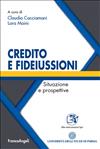
Claudio Cacciamani, Lara Maini

Credito e fideiussioni.

Situazione e prospettive

L’assicurazione del credito costituisce un prodotto poco conosciuto e scarsamente utilizzato dagli operatori di mercato, ma potrebbe essere uno strumento, se non alternativo, sicuramente di supporto alla crescita delle imprese italiane. Il volume descrive lo strumento assicurativo del credito e delle cauzioni a livello giuridico, di mercato, e funzionale, e offre un confronto diretto di testimoni attivi sul campo.

cod. 1820.279

Gérald Bronner, Laurent Cordonier

Credulity and the cognitive market: scientific distrust and conspiracy theories

SOCIOLOGIA E POLITICHE SOCIALI

Fascicolo: 3 / 2018

By (potentially) providing free access to information for all, the Internet has been viewed by some to allow the development of knowledge societies. However, we argue in this paper that the Internet actually facilitates the dissemination and acceptance of spurious belief. In particular, operating as a deregulated cognitive market, the Internet amplifies web users’ confirmation bias, which in turn could induce them to endorse pseudoscientific and conspiracy beliefs. We also show that this kind of belief is overrepresented and especially visible on the web. Moreover, the Internet facilitates a rapid accumulation of conspiracy arguments against "official" explanations of historical events. Such accumulations of heterogeneous arguments often do not support coherent "alternative theories", but instil doubt about the "official" ones. The supply structure on the cognitive market is important to understand the spread of spurious beliefs, yet this point is often overlooked in the literature.