Digital technology and risk management in rural tourism: Insights from Langhe, Roero and Monferrato
Titolo Rivista MANAGEMENT CONTROL
Autori/Curatori Edoardo Crocco, Elisa Giacosa, Francesca Culasso
Anno di pubblicazione 2026 Fascicolo 2026/1
Lingua Inglese Numero pagine 24 P. 143-166 Dimensione file 112 KB
DOI 10.3280/MACO2026-001007
Il DOI è il codice a barre della proprietà intellettuale: per saperne di più
clicca qui
Qui sotto puoi vedere in anteprima la prima pagina di questo articolo.
Se questo articolo ti interessa, lo puoi acquistare (e scaricare in formato pdf) seguendo le facili indicazioni per acquistare il download credit. Acquista Download Credits per scaricare questo Articolo in formato PDF
FrancoAngeli è membro della Publishers International Linking Association, Inc (PILA), associazione indipendente e non profit per facilitare (attraverso i servizi tecnologici implementati da CrossRef.org) l’accesso degli studiosi ai contenuti digitali nelle pubblicazioni professionali e scientifiche.
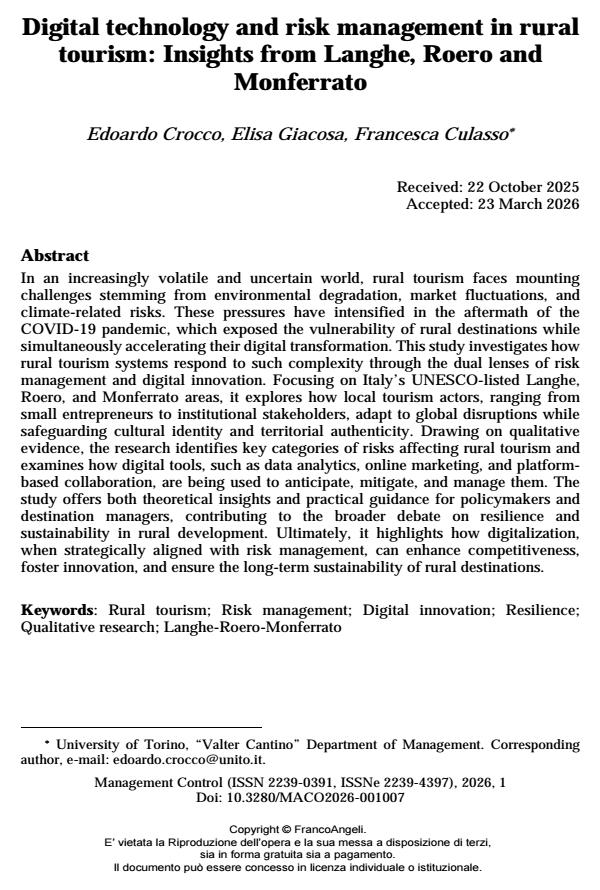
In an increasingly volatile and uncertain world, rural tourism faces mounting challenges stemming from environmental degradation, market fluctuations, and climate-related risks. These pressures have intensified in the aftermath of the COVID-19 pandemic, which exposed the vulnerability of rural destinations while simultaneously accelerating their digital transformation. This study investigates how rural tourism systems respond to such complexity through the dual lenses of risk management and digital innovation. Focusing on Italy’s UNESCO-listed Langhe, Roero, and Monferrato areas, it explores how local tourism actors, ranging from small entrepreneurs to institutional stakeholders, adapt to global disruptions while safeguarding cultural identity and territorial authenticity. Drawing on qualitative evidence, the research identifies key categories of risks affecting rural tourism and examines how digital tools, such as data analytics, online marketing, and platform-based collaboration, are being used to anticipate, mitigate, and manage them. The study offers both theoretical insights and practical guidance for policymakers and destination managers, contributing to the broader debate on resilience and sustainability in rural development. Ultimately, it highlights how digitalization, when strategically aligned with risk management, can enhance competitiveness, foster innovation, and ensure the long-term sustainability of rural destinations.
Parole chiave:Rural tourism; Risk management; Digital innovation; Resilience; Qualitative research; Langhe-Roero-Monferrato
Edoardo Crocco, Elisa Giacosa, Francesca Culasso, Digital technology and risk management in rural tourism: Insights from Langhe, Roero and Monferrato in "MANAGEMENT CONTROL" 1/2026, pp 143-166, DOI: 10.3280/MACO2026-001007