RISULTATI RICERCA

La ricerca ha estratto dal catalogo 104762 titoli

Marco Bruno, Andrea Lombardinilo

Narrazioni dell'incertezza.

Società, media, letteratura

Obiettivo dei contributi raccolti nel volume è di aprire all’interno delle scienze umane e sociali uno spazio di riflessione sulle possibili e auspicabili convergenze tra letteratura, società e media nell’era delle accelerazioni tecnologiche e della provvisorietà valoriale della seconda modernità.

cod. 1381.2.20

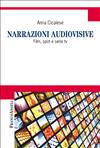
Anna Cicalese

Narrazioni audiovisive

Film, spot e serie tv

Questo manuale spiega i fondamenti della narratività e fornisce le nozioni necessarie per imparare ad analizzare e a scrivere una narrativa audiovisiva. A partire dalle basi della semiotica testuale, il testo sviluppa alcuni temi fondamentali della materia, integrandoli con numerosi esempi e analisi di film, spot e serie tv, prodotti audiovisivi tradizionali che accompagnano da decenni la quotidianità di un pubblico vasto e variegato. Un volume pensato per i corsi di comunicazione audiovisiva, ma che si rivolge anche a una platea più ampia di lettori interessati.

cod. 244.1.89

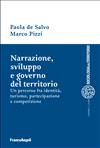
Paola de Salvo, Marco Pizzi

Narrazione, sviluppo e governo del territorio

Un percorso fra identità, turismo, partecipazione e competizione

Il volume delinea il rapporto fra sviluppo dei luoghi e promozione della loro immagine all’interno di un nuovo paradigma che pone attenzione al tema dell’identità territoriale e agli aspetti immateriali dello sviluppo, fattori di crescita che diventano elementi di innovazione e vitalità sociale, culturale ed economica. In particolare, il concetto di identità territoriale è approfondito nelle potenzialità strategiche che può presentare, evidenziando come la sua valorizzazione possa tradursi in opportunità di sviluppo per i territori e le comunità che li vivono.

cod. 1563.63

Davide Di Palma, Giovanna Scala, Gianluca Gravino, Giovanni Tafuri

Narrazione, cooperazione e life design nella scuola media: percorsi per promuovere Progetto di Vita, benessere e inclusione

EDUCATION SCIENCES AND SOCIETY

Fascicolo: 2 / 2025

Il concetto di Progetto di Vita sta assumendo crescente rilevanza nei contesti educativi, in particolare nella scuola secondaria di primo grado, fase in cui gli studenti iniziano a costruire identità, aspirazioni e competenze socio-emotive. Il presente studio ha valutato l’efficacia di un percorso didattico di 8-10 settimane, fondato su educazione narrativa, life design e attività cooperative, finalizzato a potenziare autodeterminazione, engagement scolastico, benessere soggettivo e clima di classe inclusivo. La ricerca, condotta con approccio mixed methods in una scuola di Napoli, ha coinvolto circa 100 studenti (11-14 anni), inclusi alunni con Disturbi Specifici dell’Apprendimento (DSA). Sono stati utilizzati strumenti quantitativi standardizzati (KIDSCREEN-10, BPNSFS, SEM, LCQ) e strumenti qualitativi (interviste narrative, diari riflessivi dei docenti). I risultati evidenziano un incremento significativo nei punteggi relativi a benessere, engagement e soddisfazione dei bisogni psicologici di base, accompagnato da narrazioni che testimoniano una maggiore consapevolezza di sé, un rafforzato senso di appartenenza e un più ampio riconoscimento reciproco. Lo studio dimostra come l’integrazione di pratiche narrative e cooperative possa favorire lo sviluppo del Progetto di Vita e migliorare la qualità della vita scolastica, con effetti particolarmente positivi sugli studenti con DSA.
Il cortometraggio Passing Hearts di J. Brisinger (Sve. 2012) esemplifica perfettamente lo sviluppo dell’"arco narrativo" poiché in soli quindici minuti colpisce al cuore lo spettatore. Infatti sin dai primi istanti crea una aspettativa, delinea uno sviluppo (viaggio) e fa tornare tutti pezzi del puzzle nello splendido finale. Passing Hearts è un cortometraggio emozionante che induce lo spettatore a prendere parte al processo di elaborazione della dolorosa condizione di finitezza umana del protagonista. Il viaggio di Daniel, alla ricerca dei genitori del ragazzo che gli ha donato un cuore, diviene così metafora della possibilità di incontro tra esseri umani, dove il corpo, con le sue carenze e i suoi limiti, diviene il mezzo attraverso il quale prendere contatto con la propria ed altrui individualità. Il tema scelto è psicologicamente e filosoficamente rilevante perché riguarda l’emergenza dell’Ombra che assume la forma del doppio, della elaborazione del lutto e della nostra comune fragilità umana.

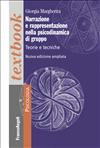
Il lavoro con i gruppi richiede coordinate composite per osservare, rappresentare e narrare i processi. Questo volume, qui proposto in una nuova edizione ampliata, parte dalle coordinate teoriche sul gruppo psicodinamico, attraversa i concetti chiave di teoria della tecnica per poi approfondire il tema dei linguaggi, considerando narrazione e rappresentazione, come modelli organizzatori del funzionamento psichico e delle dinamiche relazionali e istituzionali.

cod. 1240.1.83

Maria Cristina Castellani, Giancarlo Malombra

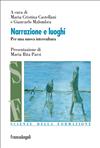
Narrazione e luoghi

Per una nuova intercultura

Un testo per insegnanti di ogni ordine e grado, ma anche per lettori appassionati di viaggi fuori e dentro di sé. Un modo per esplorare attraverso i libri il nostro territorio e quello degli altri. Un metodo che può essere insegnato a scuola…

cod. 292.3.38

Valter Santilli, Sponti Wilma Trasarti

Narrazione e "Romanzo familiare" nella terapia relazionale. Percorsi formativi esperienziali

RIVISTA DI PSICOTERAPIA RELAZIONALE

Fascicolo: 44 / 2016

Gli autori, dopo aver rintracciato in Sigmund Freud il creatore del concetto "clinico" di "Romanzo familiare", mettono in evidenza come la epistemologia narrativa di Gregory Bateson, Milton Erickson, Carl Whitaker e Mara Selvini Palazzoli sia un implicito elemento nella formazione del futuro terapeuta sistemico/relazionale. Analizzano poi la componente didattico/formativa della narrazione del genogramma trigenerazionale portato individualmente da ogni singolo allievo durante gli anni di formazione. Suggeriscono infine l’idea che una accresciuta conoscenza delle proprie origini e le riflessioni delle loro narrazioni transgenerazionali possano divenire per gli allievi l’inizio di un loro "Romanzo familiare storico", arricchito dalla riflessione dell’intrec¬cio sistemico nel lavoro psicoterapeutico.

Duccio Demetrio

Narrazione come iniziazione alla vita. L'accompagnamento autobiografico nelle transizioni all'adultità

SOCIOLOGIA E POLITICHE SOCIALI

Fascicolo: 2 / 2007

Telling stories as life initiations. The autobiographical approach to the study of the transition to the adulthood ABSTRACT: In his paper, the author pinpoints the link between education and autobiographical approach during the transition to adulthood. He demonstrates that we cannot assimilate education and narrative approach whenever we study this life-phase. Demetrio focalizes on the youth as endless training to the adulthood whose nature is not only social but psychological and moral too. Moreover, the author try to formulate a narrative educational option for the developing of the adulthood: the autobiographical one. For the author, to acquaint young boys and girls with their autobiography is possible thanks to the writing that is, very often, dejected by the school. It is very important that the adolescents write and narrate more and more about their selves because, in this way, they can understand the role of the writing in their lives: it will help them really every time during their subsequent stage of life, for resolving with success problems and for passing beyond crises. When adolescent becomes adult, education as well as autobiographical narration are a very fruitful support of the closest personal maturity since writing on self is personal auto-analysis, too; it’s nearly a reflexive and continuous monitoring on both the inner experience and the relational one. In this way, the adolescent increases his or her reflexive comprehension of the life and its problems, its painful or snaps events. So, the autobiography is a very initiation and development manner of the personal and interpersonal forming; it’s a well constructed testimony about the individual growing; it’s an opportunity for planning and testing experiences and adventures. The adolescence, is not only a transitional life stage; it’s a training to the social, psychological and moral adult life.

Simona Ceccarelli

Narratologia e televisione: dagli X-files ai racconti di cronaca

SOCIOLOGIA DELLA COMUNICAZIONE

Fascicolo: 32 / 2001

The article summarizes a research focused on the refractions between tale and chronicle. The corpus of the research consists of the whole American TV series The X-files, that the authoress assumes as an exemplar text in order to investigate the narrative structures that characterise big and small today’s tales (individual and collective), and the fall of the confines between fiction and chronicle, fiction and individual tales. The authoress proposes to read the text through multiple accesses, stating an analogy between the structure of the tale and the structure of an interactive hypertext (like a videogame), and giving some link (necessarily arbitrary) through which the text can be interpreted: pervasive themes like those of the double and of the reflex, those of the loss, of the end, of the mythical time, of the conspiracy and likelihood syndrome. Moreover the authoress touches upon other subjects treated within the research and more closely linked to the reception of the text, like the interesting phenomenon of production of accessory or secondary narrativity in the Web; with regard to this matter, the authoress proposes a possible theory about the practices of textual re-writing.

Sharry Aiken, Harini Sivalingam

Narratives of Harm and the case for detention abolition

MONDI MIGRANTI

Fascicolo: 1 / 2024

This essay aims to foreground the perspectives and lived experiences of asylum-seekers, refugees and other migrants in the growing calls to abolish immigration detention. While focused on a singular case study - the Tamil maritime arrivals to Canada in 2009 and 2010, our findings shed light on the broader harms of immigration detention. We begin by briefly describing the breadth and scope of immi-gration detention and the legal framework that governs detention in Canada. The heart of the essay follows with a sampling of the narratives drawn from the case study - all of which highlight the incalculable harms produced by the carceral state. The essay concludes by underscoring the imperative for detention abolition as both an aspirational and practical goal.

Marco Rondonotti, Federica Pelizzari, Giorgia Mauri, Simona Ferrari

Narrative Transformation for Empowering Women in the Face of Illness. Insights from the “Sorrisi in Rosa” Project

EDUCATIONAL REFLECTIVE PRACTICES

Fascicolo: 1 / 2024

The need of society to activate medical prevention has led the scientific community to value narrative skills to increase the understanding and acceptance of disease. With the diagnosis of cancer, everything changes: from the perception of one’s body to the relationship with family members, and it is only through the narration of one's experience of treatment that the person shares their feelings, emotions, fears and concerns with other individuals, retracing the imaginary experience and sharing a personal phase of their life. This approach meets Humanitas’ need to evaluate the “Sorrisi in Rosa” (SiR) project dedicated to accompanying women undergoing screening for or diagnosed with breast cancer to highlight the elements of impact and spaces for development in accompanying patients. Through emotional support and sharing their stories, patients involved in the program can develop a sense of community and mutual understanding. This not only provides an environment conducive to coping with the challenges of the disease but can also help reduce the sense of isolation that often accompanies breast cancer. The monitoring by CREMIT (Center for Research on Media Education, Innovation and Technology), in collaboration with IRCCS Humanitas is part of the desire to investigate and understand how storytelling can make illness and treatment a transformative process, capable of rereading and coping better with one’s personal experience as a woman. The research presented here, divided into three phases, focuses on analysing the narratives produced within the project and the questionnaire administered, to improve care and support for women involved in breast cancer screening and treatment programs.

Ovidiu Gavrilovici, Aliona Dronic

Narrative pathways to prevent radicalization. Tree of Life practice in a Romanian prison

PSICOLOGIA DI COMUNITA’

Fascicolo: 2 / 2019

There is an increased interest for radicalization and its prevention. The identity crisis para-digm suggests the potential usefulness of collaborative strategies for the construction of desir-able identities. This paper describes a pilot model of two narrative practices - The Tree of Life and the Definitional Ceremony, supporting alternative desirable identities as pathway to pre-vent radicalization in Iasi Prison, in Romania. Eight young adults detention and 6 universitary students were involved in the narrative processes. The authors claim that the narrative support-ive practices have an effect of restoring dignity, re-humanizing contexts and relationships, and supporting preferred narratives worth living.

This paper shows how a long term process of narrative inquiry may act as a reflective tool for challenging and revising preliminary researcher frames for an inquiry. In this paper I return to a detailed set of fieldnotes taken over a several year period to show how my own assumptions and biases changed throughout the course of inquiry. This work is based on a study of newcomer Chinese family educational narratives. Several stories encountered during the first days of field work are revisited as they show up through the course of conducting field work.

Pierluca Birindelli

Narrative Identity

A Personal Roadmap

The author addresses the theme of narrative identity in an interpretative itinerary that employs sociological, psychological and psychoanalytic concepts to explore the circular relationship between sense of identity, self/other recognition and the space-time perspective. Observing the solitude of the individual in late-modern society, the second part of the book proposes a way out: becoming actively involved in the crafting of our lives by writing our own story.

cod. 1520.829

Susanne Breinlinger, Ann-Kathrin Pütz, Natalie R. Stevens, Daniela Mier, Inga Schalinski, Michael Odenwald

Narrative Exposure Therapy in challenging and conditions

MALTRATTAMENTO E ABUSO ALL’INFANZIA

Fascicolo: 3 / 2020

Patients with past exposure to adverse experiences are frequent in clinical services, many of them suffering from co-occurring Posttraumatic Stress Disorder (PTSD). Despite first evi-dence that encourages diagnostics and trauma therapy provision for PTSD, complex cases are often excluded from evidence-based treatments. First, we review the evidence of PTSD treatment for two groups of complex cases: patients with psychotic disorders and pregnant refugee women. Second, we report on how NET is applied to these groups in specialized treatment centres and how the technique is adapted to the specific needs. We encourage cli-nicians to build up concepts of integrated treatment for complex cases including NET as one core component.