cod. 2000.1158
La ricerca ha estratto dal catalogo 104763 titoli
cod. 2000.1158
Frontex, the European Agency for the Management of Operational Cooperation at the External Borders of the Member States of the European Union, was set up in 2004 to reinforce cooperation between national border authorities. The present research intends to analyze the role of the Agency after the adoption of the new Regulation 1168/2011, which considerably extends the Frontex mandate (inter alia, providing for the creation of European Border Guards and strengthening the role of the Agency in joint operations) and introduces several references for the full respect of fundamental rights in all Frontex activities . The aim is to investigate if the mechanisms introduced to promote and monitor human rights are consistent with the Agency’s obligations to respect human rights, in the light of the recent inquiry promoted by the European Ombudsman. A particular focus will concern the question of the allocation of responsibility among Members States and Frontex in case of violations of human rights during joint operations at sea, and the legal remedies available for individuals.

Sandro Portelli affronta il rapporto tra fronte interno e discorso storico negli Usa attraverso la produzione musicale durante la seconda guerra mondiale. Pur non frutto diretto della propaganda statale e istituzionale, i testi musicali ricorrevano ampiamente a stereotipi come la demonizzazione del nemico, il mito della frontiera, la guerra "sacra" contro il demonio, ecc.
Cultura, lingua, rappresentazione dell'eros dagli albori a Internet
La cultura digitale consente di importare nell’esperienza quotidiana, con un semplice clic, le fantasie più intime e le perversioni più curiose; pratiche e proiezioni erotiche che contribuiscono a neutralizzare la dicotomia fra il bene e il male, il bello e il brutto, il piacere e il dolore, favorendo l’eclissi del sacro. È la fine dell’intimità, dell’inaccessibilità di un privato che fino a ieri, proprio nella sfera del “sacro”, si esauriva e trovava la sua ragion d’essere.
cod. 1116.19

Also famous as ‘Maximum City’ (Mehta, 2005), Mumbai is undergoing a period of extremely rapid growth as a result of the booming Indian economy. While numerous multinationals are opening offices in areas once occupied by cotton mills and new middle class districts are springing up on the margins of the city, most of the population still live in shanty towns. Contrasts like these within the city show Mumbai as a particularly clear case of polarisation, which raises doubts over some current housing policies designed to raise it to the status of a ‘global city’ and to reduce polarisation by removing the shanty towns and moving the inhabitants to new neighbourhoods. The paper focuses on Dharavi and attempts to highlight the fundamental role played by informal production in the shanty towns, the losses in this sector due to the removal of the shanty towns and the possible greater polarisation resulting from these policies.

The complexity of the class context changes knowledge that, today, experiments more and more the ambiguity between global and local. Knowledge seems to aim at the construction of nets of modal meanings. Even the posture of teachers and students change and feedback is one of the aspects that can mostly affect learning by fostering the acceptance of reciprocal worlds present in the class context. In this direction, also feedback seems to change and from an informative structure, as proposed by Gagné, feedback is acquiring a generative rationale, that is, a structure able to open different interpretative perspectives. In the present contribution modalities of feedback collection are described such as Mentimeter.com and Google.com forms being used in different courses at the department of Education, Cultural Heritage and Tourism at the University of Macerata. Those tools were used to valorise the students’ informal and non formal knowledge and to define personalized trajectories. Feedback surely was the tool able to bridge the students’ and teachers’ experience and knowledge towards the construction of a net of meanings built in context.
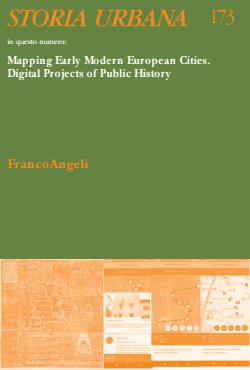
The city of Dubai, as well as other Arab Gulf cities, have been rightly privileged in the field of urban studies as applied to the Arab/Middle Eastern region. The spectacular rise of Arab Gulf cities is often referred to as a model for other cities, particularly in the Arab Middle/Eastern region, where many architects, contractors and urban planners aspire to replicate. However, is that really what is happening? This paper argues that the focus on the Gulf model conceals local dynamics in cities across the Arab world, which also has implications in terms of understanding the trend of ‘neoliberal urban developments’ in the region. This paper will use the cases of the ‘Abdali project’ in Amman, Jordan, and the ‘Solidere project’ in Beirut, Lebanon, to show the limits of understanding these developments as cookie cutter models of Gulf cities and to demonstrate that more attention needs to be paid to the local circumstances, dynamics, and influences that shaped urban developments in the two Levantine capital-cities.

The article gives an overview over the relations between West and East Ger- many between the signing of the Basic Treaty in 1972 and the demise of the German Democratic Republic (Gdr) in the peaceful revolution of 1989. In 1972, the Federal Republic had consented to a de facto recognition of the Gdr but adhered to its constitutional obligation to reunification while the Gdr aimed at recogni- tion by international law from its West German rival. The Federal Government’s short-term policy was to make the inner-German border more permeable. To contrast this, the East German leadership tried to delimitate the Gdr from the West by raising the compulsory exchange for visitors in 1973. But the Gdr had objective di?culties to uphold its policy of delimitation. On the one hand, West German economic and political conditions remained points of reference for the East Germans, especially after East-West contacts were enhanced during the Détente. On the other hand, the Gdr became increasingly economically depen- dent on the Federal Republic, especially after the Soviet Union substantially reduced the support in 1981. In the Eighties, it permitted many more inner-Ger- man human contacts than it would have liked. Moreover, the East German le- adership under Erich Honecker in 1983 did not yield to Soviet pressure to in- crease delimitation vis à vis the Federal Republic after the German Bundestag in November 1983 had decided to deploy Inf weapons. Honecker took his visit to West Germany in September 1987 as the final recognition the Gdr. But his triumph was short-lived. From 1987, relations between Moscow and the Frg became more important than those between Moscow and East Berlin. The Gdr was threatened by isolation. In the end it was the Gdr’s weakness with regard to economic power, its unwanted political system and the unsolved German question, which led to its defeat in the contest with the Federal Republic.
The paper presents the results of the research carried out at the University of Bari in the PRODID project - Preparation to Professionalism Teaching and Didactic Innovation, which involved 8 Italian Universities (Padua, Bari, Camerino, Catania, Florence, Foggia, Genoa, Turin) constituents the Italian Association for the promotion and development of teaching, learning and teaching at the University. The research was conducted through the administration of a questionnaire developed according to the Framework of Teachingof Tigelaar and colleagues (2004), focusing on the usual teaching practices, on the beliefs and needs of the teacher, on different aspects of teaching professionalism. Thanks to the experimentation it was possible to analyse the needs of the Bari University context and set up the PRODID-TLL (Teaching Learning Laboratory) project, focused on structuring pilot training paths, innovative and personalized according to different target groups, for the professional development of university teachers
The volume presents a selection of best practices implemented in the Tuscany region in the field of reception and integration policies for migrants and asylum seekers. The volume adopts the framework of the “White Paper on Reception Policies for Asylum Seekers and International or Humanitarian Protection Holders” released in 2017 by the Tuscany Region and Anci Toscana to consolidate principles, guidelines and best practices, as well as to provide a common framework aimed at improving reception services and integration policies for migrant citizens.
cod. 11520.24

The "Viagra phenomenon" is the most visible expression of a global process of construction of masculinity through medicalized practices, led by an alliance of specialized physicians’ expert discourses and multinational pharmaceutical companies’ marketing strategies. In Italy, since direct-to-consumer advertising of prescription drugs is not allowed, insistent awareness campaigns have been promoted, reproducing a cultural script in which sex is recast as a core element of a healthy lifestyle: these campaigns depict male underperformances as an emerging social epidemic and invite all men to self-monitor their sexual health, living up to medically defined standards, and to ask for medical advice if they feel inadequate. The analysis of documentary material and in-depth interviews with medical experts shows how medical discourses, setting male sexual health as a new public issue, construct both the masculinity to be fixed and the new forms of medical expertise legitimized to treat it. Treatments for male sexual dysfunctions work at transmitting cultural scripts which reinforce normatively gendered expressions of sex. However, some interviewees step aside the hegemonic narrative and criticize what they consider an improper and risky overuse of quick-fix diagnostic and therapeutic solutions, bringing psychological, relational and socio-contextual dimensions back into the picture.
This investigation focuses on Leipzig, one of the most prominent examples of a large city in eastern Germany that shrank during the 1990s and began growing again in the 2010s. What happened in those old, inner-city neighbourhoods especially affected by shrinkage, outmigration, abandonment and vacancy, as Leipzig’s inner east and inner west were? The focus here will be on the field of housing, real estate market development and residential change; the new role of green spaces and greening strategies in a context of contested urban space; and the ‘fate’ of spaces for interim uses and experimentation that had been established during the period of shrinkage. How and why did Leipzig shift from shrinkage towards new growth? What are the impacts of this change for different fields of urban development and policy? What can be learnt from Leipzig for a broader perspective?
Special Pedagogy is a continuous composition of relations, actions and projects. Special Pedagogy should not have the presumption to consider worthy only those questions to which we already know the answer. It should learn to live with questions that do not have ready prepared answers. Its task is to seek answers without being sure of finding them. Special Pedagogy owes much of its knowledge and wealth of experience to the cultural presence of persons with disabilities: in this paper, thanks to the efforts of people with disabilities and their fight for civil rights in Italy, we present the historical and socio-cultural path from segregation (institutionalization) to the inclusion in the society of blind people, with a particular attention paid to the adolescenthood.
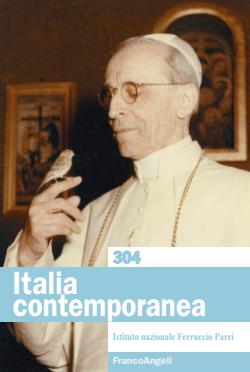
This article examines the “sexual revolution” of the 1960s and 1970s in Italy from the perspective of emotional history. Drawing mainly on unpublished oral sources and advice columns in women’s magazines, it assesses the contribution of the feminist method of consciousness-raising to the reception of and reaction to the so-called sexual revolution. Focusing on the ‘long 1968’ as it unfolded in Italy, I analyse how the new models of an apparently freer sexuality were appropriated and adapted to the emotional counter-community created by feminists practising consciousness-raising towards what would later be defined as sexual liberation, and I discuss the openings and limits that this approach has entailed.

From Relational Hunger to Intimacy - This paper presents a personal story embedded within a synthesis of the current international expertise on the development of the capacity for intimacy in adult sexual relationship. It explores the theme of ethical intimacy and erotic transference and was first given to a bicultural hui3 called Weaving our Living Stories facilitated by the New Zealand Association of Psychotherapists (NZAP) and Awhina4 Maori healers in March 2007.
Aim of the paper is to attempt an estimate of the air emissions external costs related to activity sectors in Italy with both a production and demand perspective and to explore possible appli-cations of the approach in public policies. This is done by adopting an environmentally ex-tended national input-output modelling (about 20 substances are covered, among which CO2 emissions) and law recognized methods for calculating air emissions external costs in Italy. The external costs resulting from this exercise on 2015 emissions sum up to € 77.4 billion, € 51.7 billion of which are related to all economy sectors of activity, while € 25.7 billion are due to household activities. Total external costs of air emissions embodied in final demand sum up to 53.0 billion euro in 2015 if total activated production is considered (including external costs embodied in imports), while they decrease to 36.1 billion euro if only domestic activated pro-duction is considered (assuming zero external costs embodied in imports). The specific exter-nal costs embodied in final demand, calculated for each sector through input-output analysis, are then compared with the specific external costs of direct emissions of the same sector pro-duction, highlighting the additional information provided by input-output analysis: many branches with relatively low direct external costs show much higher external costs when the supply chain branches are included in the assessment. A final chapter discusses the main poli-cy application areas of the suggested approach, focusing particularly on national environmental fiscal reform, company level environmental management, public investments planning and sustainable finance.