Digitalization and Accountability: Pros and Cons of Sustainability Reporting with Digital Technologies
Titolo Rivista MANAGEMENT CONTROL
Autori/Curatori Chiara Xhindole, Lara Tarquinio
Anno di pubblicazione 2026 Fascicolo 2026/1
Lingua Inglese Numero pagine 26 P. 117-142 Dimensione file 124 KB
DOI 10.3280/MACO2026-001006
Il DOI è il codice a barre della proprietà intellettuale: per saperne di più
clicca qui
Qui sotto puoi vedere in anteprima la prima pagina di questo articolo.
Se questo articolo ti interessa, lo puoi acquistare (e scaricare in formato pdf) seguendo le facili indicazioni per acquistare il download credit. Acquista Download Credits per scaricare questo Articolo in formato PDF
FrancoAngeli è membro della Publishers International Linking Association, Inc (PILA), associazione indipendente e non profit per facilitare (attraverso i servizi tecnologici implementati da CrossRef.org) l’accesso degli studiosi ai contenuti digitali nelle pubblicazioni professionali e scientifiche.
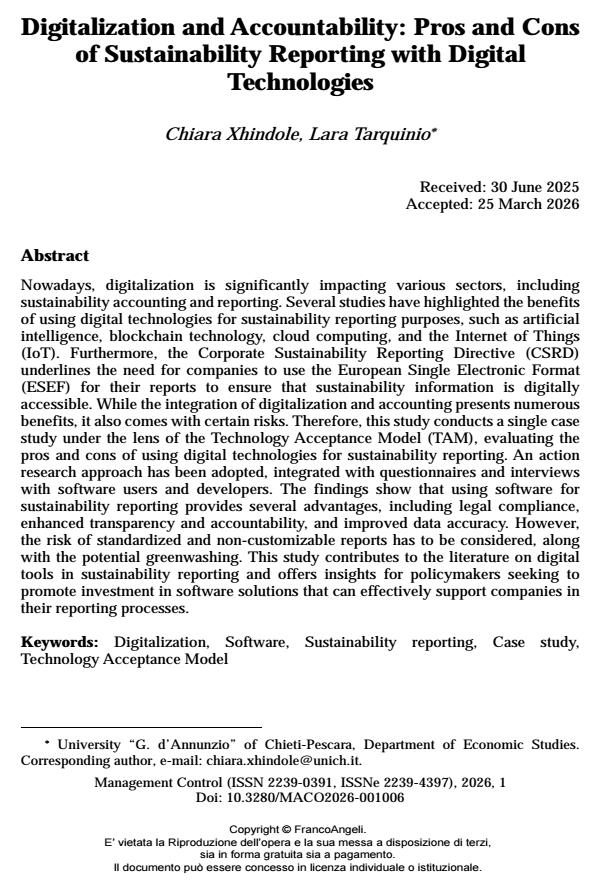
Nowadays, digitalization is significantly impacting various sectors, including sustainability accounting and reporting. Several studies have highlighted the benefits of using digital technologies for sustainability reporting purposes, such as artificial intelligence, blockchain technology, cloud computing, and the Internet of Things (IoT). Furthermore, the Corporate Sustainability Reporting Directive (CSRD) underlines the need for companies to use the European Single Electronic Format (ESEF) for their reports to ensure that sustainability information is digitally accessible. While the integration of digitalization and accounting presents numerous benefits, it also comes with certain risks. Therefore, this study conducts a single case study under the lens of the Technology Acceptance Model (TAM), evaluating the pros and cons of using digital technologies for sustainability reporting. An action research approach has been adopted, integrated with questionnaires and interviews with software users and developers. The findings show that using software for sustainability reporting provides several advantages, including legal compliance, enhanced transparency and accountability, and improved data accuracy. However, the risk of standardized and non-customizable reports has to be considered, along with the potential greenwashing. This study contributes to the literature on digital tools in sustainability reporting and offers insights for policymakers seeking to promote investment in software solutions that can effectively support companies in their reporting processes.
Parole chiave:Digitalization, Software, Sustainability reporting, Case study, Technology Acceptance Model
- Connectivity: A New “Portemanteau” Concept in Corporate Reporting? A Preliminary Literature Review on Linkages Between Financial and Sustainability Information Michele A. Rea, in Sustainability /2026 pp.9228
DOI: 10.3390/su18189228
Chiara Xhindole, Lara Tarquinio, Digitalization and Accountability: Pros and Cons of Sustainability Reporting with Digital Technologies in "MANAGEMENT CONTROL" 1/2026, pp 117-142, DOI: 10.3280/MACO2026-001006