Design International

DESIGN INTERNATIONAL SERIES

Direction: Silvia Piardi

Scientific Board:
Alessandro Biamonti, Alba Cappellieri, Mauro Ceconello, Claudio Germak, Ezio Manzini, Carlo Martino, Promil Pande, Mario Piazza, Angelica Ponzio, Francesco Scullica, Francesca Tosi, Yingchun Zang

Editorial Board:
Alessia Brischetto, Alessio Caccamo, Barbara Camocini,
Giuseppe Carmosino, Eugenia Chiara, Andrea Di Salvo, Elena Elgani,
Silvia Gramegna, Shashwat M. Pande, Gustavo Alfonso Rincon,
Fabiano Scherer, Daniela Selloni, Davide Spallazzo, Livia Tenuta

The Design International series was launched in 2017 as a place for cultural exchange between the different design souls. Over the years, the series has consolidated its position as a point of reference for international research, outlining a continuously updated research map.
The Scientific Committee, consisting of experts in fashion, interiors, graphics, communication, product, service, social interaction, innovation and emotional design guarantees the level of the accepted texts. The Editorial Board, consisting of young experts in the different branches of design, supports the work of the scientific committee. After an initial evaluation by the two committees, the texts undergo international double revision.

(read all)

Peer Reviewed series

The search has found 55 titles

Carla Sedini

Collectively Designing Social Worlds

History and Potential of Social Innovation

What are the social facts that led to the need to activate social innovation processes? What is (and what can be) the role of design in these processes?
The challenges of modernity and post-modernity have led designers to become often protagonists and activators of sustainable and social innovation processes, possible thanks to users' and stakeholders' involvement in co-creation processes.
This book adopts a multidisciplinary approach to eviscerate social innovation as a concept with its foundation in theoretical, political, and methodological domains. The present discussion will be based on sociology and design. The first will mainly define the theoretical framework of reference; the second will mostly deal with experimental and applied research dealing with social innovation.

cod. 10319.6
Barbara Camocini, Francesco Vergani

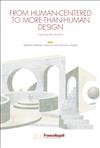
From Human-centered to More-than-Human Design

Exploring the transition

The environmental emergency of the last century has led to an urgent need to reformulate the predominant role of human beings on the planet by undertaking a less anthropocentric design approach. Within this theoretical framework, the book explores the role of Design as a multifaceted discipline capable of exploring the complexity of a changing world, and reconsiders the human being’s position in a pervasive relationship with the contemporary environments through a More-than-Human approach.

cod. 10319.11

Barbara Camocini, Davide Fassi

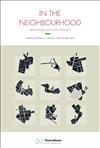
In the Neighbourhood.

Spatial Design and Urban Activation

Neighbourhoods of contemporary cities are ‘hypersensitive’ and ‘fragile’ areas where dismantling and transformation processes generate fragmentation and displacement. Reconstruction and re-occupation of urban spaces guided by residents are becoming increasingly frequent in these places. This book presents some reflections on the role of design discipline in this fertile and proactive context, proposing specific research methodologies and intervention strategies in close relation with the resident population, building new skills, creating original synergies, and new processes of inclusion and social innovation.

cod. 319.1

Barbara Camocini, Annalisa Dominoni

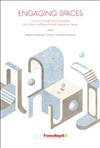
Engaging Spaces

How to increase social awareness and human wellbeing through experience design

The book presents different perspectives of analysis and new models of experience, reconfirming the importance assigned to the wellbeing and human-centered approach in the contemporary spatial design disciplinary debate. The aim is to explore the transformation process which we are living, both in private and in public spaces, underlining the central role of design to define new qualities of connections to live together in relation with the space around us.

cod. 10319.16

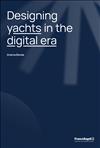
This volume examines the transformation of yacht design within the context of the digital and industrial transitions characterising contemporary design practice. Drawing on over ten years of research, the volume investigates how computational technologies, advanced manufacturing, and data-driven systems are redefining processes, roles, and disciplinary boundaries in the yachting industry.

cod. 10319.40

Antonella Penati, Agnese Rebaglio

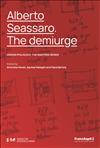
Alberto Seassaro. The demiurge

Alberto Seassaro. Il demiurgo

This volume is part of an editorial project aimed at enhancing the history of design at Politecnico di Milano and, in particular, inaugurates the series The Masters, dedicated to the figures whose thought has fueled the cultural pluralism that is the hallmark of the entire institutional project. The remembrance of the Masters begins with Alberto Seassaro, the demiurge, a Dean capable of giving Design a home by conceiving and building the first Italian Faculty at Politecnico di Milano.

cod. 10319.43

Annalisa Dominoni, Francesco Scullica

Designing Behaviours for Well-Being Spaces

How disruptive approaches can improve living conditions

The book explores the radical transformation of living and working spaces, in which the hybridization of interior and exterior requires a new vision able to interpreter renewed people’s behaviours and needs, a challenging issue for the design discipline that has a multidisciplinary nature as well as a multiscale approach for both research and practice. Our ambition is to re-launch an aesthetic, sustainable, design-based approach to improve dwelling conditions, trying to implement care into different well-being dimensions – mental, physical, social, and global.

cod. 10319.12

Anna Meroni, Daniela Selloni

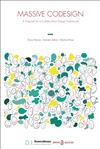
Massive Codesign.

A Proposal for a Collaborative Design Framework

This book focuses on “massive codesign”: the idea that multiple and/or numerous participants having different voices collaborate in a design process broken down into different steps and formats and resulting in a relevant and diversified amount of data.

cod. 10319.1

Anna Barbara, Yuemei Ma

Extended Store

How digitalization effects the retail space design

Extended store has been a work of mapping the phenomena of digitalization that effects spaces and above all the world of retail. Shops will not disappear in the 21st century, but they will have to change (if they have not already done so) to survive. They will have to evolve by integrating technological solutions that are not only back-end (as they have done so far), but front-end, and therefore available to customers in the shop as in the cases reported in the book.

cod. 10319.10

Anna Barbara, Silvia Maria Gramegna

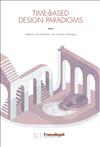
Time-Based Design Paradigms

The book explores the relationship between time and the design of spaces. The temporal dimension of spaces is a horizon that has yet to be strongly explored. In the future it is increasingly likely that it will be the forms of time, rather than those of space, that will undergo the most interesting transformations. The essays explore time: as measurements, adaptations/compositions, memories, machines and technologies, identities, narratives, sensitivities in an increasingly globalized and wrapped world.

cod. 10319.14