Ira, indignatio, vindicatio: etica, psicologia e teologia nella riflessione medievale sull’indignazione
Titolo Rivista RIVISTA DI STORIA DELLA FILOSOFIA
Autori/Curatori Silvana Vecchio
Anno di pubblicazione 2026 Fascicolo 2026/1
Lingua Italiano Numero pagine 12 P. 30-41 Dimensione file 118 KB
DOI 10.3280/SF2026-001003
Il DOI è il codice a barre della proprietà intellettuale: per saperne di più
clicca qui
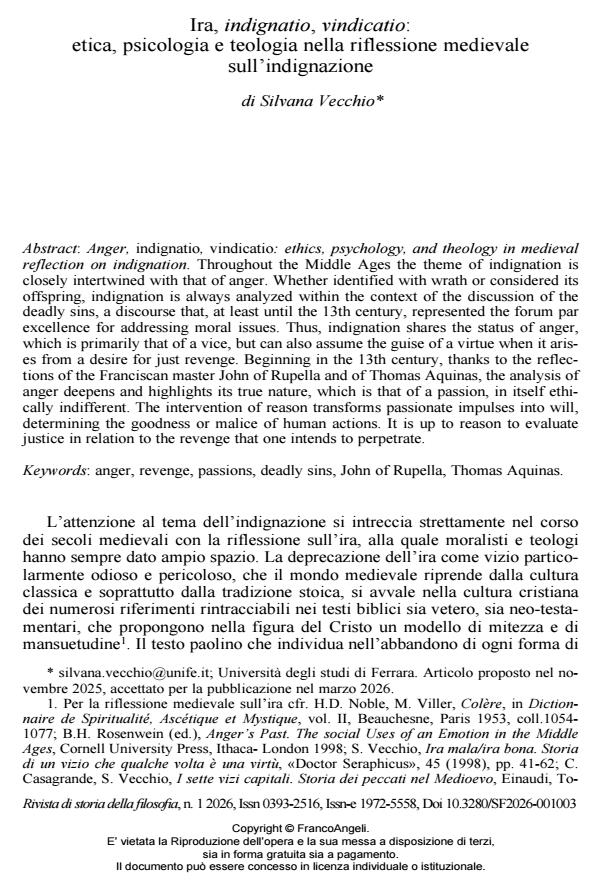
Qui sotto puoi vedere in anteprima la prima pagina di questo articolo.
Se questo articolo ti interessa, lo puoi acquistare (e scaricare in formato pdf) seguendo le facili indicazioni per acquistare il download credit. Acquista Download Credits per scaricare questo Articolo in formato PDF
FrancoAngeli è membro della Publishers International Linking Association, Inc (PILA), associazione indipendente e non profit per facilitare (attraverso i servizi tecnologici implementati da CrossRef.org) l’accesso degli studiosi ai contenuti digitali nelle pubblicazioni professionali e scientifiche.
Throughout the Middle Ages the theme of indignation is closely intertwined with that of anger. Whether identified with wrath or considered its offspring, indignation is always analyzed within the context of the discussion of the deadly sins, a discourse that, at least until the 13th century, represented the forum par excellence for addressing moral issues. Thus, indignation shares the status of anger, which is primarily that of a vice, but can also assume the guise of a virtue when it aris- es from a desire for just revenge. Beginning in the 13th century, thanks to the reflec- tions of the Franciscan master John of Rupella and of Thomas Aquinas, the analysis of anger deepens and highlights its true nature, which is that of a passion, in itself ethi- cally indifferent. The intervention of reason transforms passionate impulses into will, determining the goodness or malice of human actions. It is up to reason to evaluate justice in relation to the revenge that one intends to perpetrate.
Parole chiave:anger, revenge, passions, deadly sins, John of Rupella, Thomas Aquinas
Silvana Vecchio, Ira, indignatio, vindicatio: etica, psicologia e teologia nella riflessione medievale sull’indignazione in "RIVISTA DI STORIA DELLA FILOSOFIA" 1/2026, pp 30-41, DOI: 10.3280/SF2026-001003