Digital Transformation and Contractual Asymmetry: Reinforcing Traveller Protection in Online Tourism Services
Titolo Rivista RIVISTA ITALIANA DI DIRITTO DEL TURISMO
Autori/Curatori Antonia Paniza Fullana
Anno di pubblicazione 2026 Fascicolo 2026/49
Lingua Inglese Numero pagine 25 P. 47-71 Dimensione file 352 KB
DOI 10.3280/DT2026-049003
Il DOI è il codice a barre della proprietà intellettuale: per saperne di più
clicca qui
Qui sotto puoi vedere in anteprima la prima pagina di questo articolo.
Se questo articolo ti interessa, lo puoi acquistare (e scaricare in formato pdf) seguendo le facili indicazioni per acquistare il download credit. Acquista Download Credits per scaricare questo Articolo in formato PDF
FrancoAngeli è membro della Publishers International Linking Association, Inc (PILA), associazione indipendente e non profit per facilitare (attraverso i servizi tecnologici implementati da CrossRef.org) l’accesso degli studiosi ai contenuti digitali nelle pubblicazioni professionali e scientifiche.
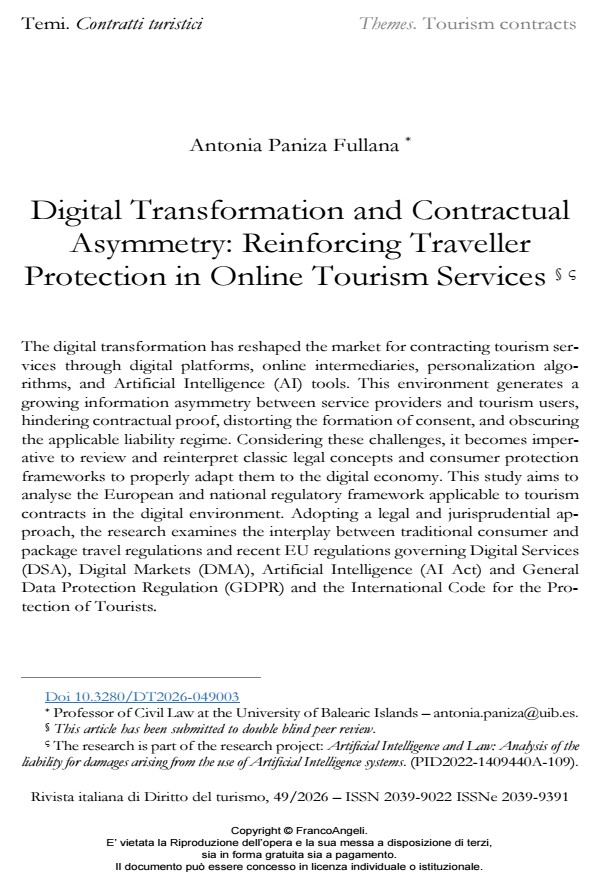
The digital transformation has reshaped the market for contracting tourism services through digital platforms, online intermediaries, personalization algorithms, and Artificial Intelligence (AI) tools. This environment generates a growing information asymmetry between service providers and tourism users, hindering contractual proof, distorting the formation of consent, and obscuring the applicable liability regime. Considering these challenges, it becomes imperative to review and reinterpret classic legal concepts and consumer protection frameworks to properly adapt them to the digital economy. This study aims to analyse the European and national regulatory framework applicable to tourism contracts in the digital environment. Adopting a legal and jurisprudential approach, the research examines the interplay between traditional consumer and package travel regulations and recent EU regulations governing Digital Services (DSA), Digital Markets (DMA), Artificial Intelligence (AI Act) and General Data Protection Regulation (GDPR) and the International Code for the Protection of Tourists.
Antonia Paniza Fullana, Digital Transformation and Contractual Asymmetry: Reinforcing Traveller Protection in Online Tourism Services in "RIVISTA ITALIANA DI DIRITTO DEL TURISMO" 49/2026, pp 47-71, DOI: 10.3280/DT2026-049003