Experiential-Inductive Learning
Autori:

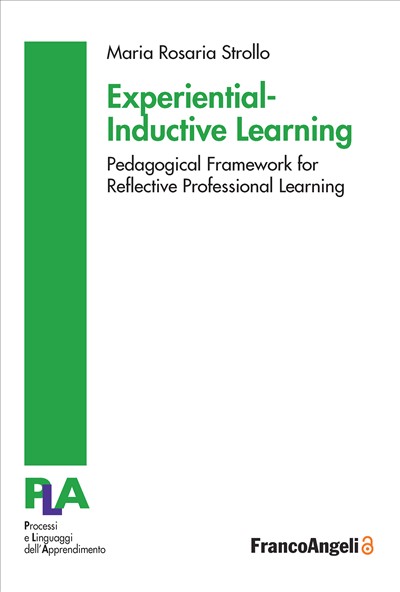
Maria Rosaria Strollo

Experiential-Inductive Learning

Pedagogical Framework for Reflective Professional Learning

Experiential-Inductive Learning explores a central challenge in professional education: how can experience become a genuine source of knowledge rather than remain simply something that happens to the learner? Drawing on experiential learning, inductive teaching, reflective practice, and metacognition, the volume develops a pedagogical framework in which experience, reflection, problematization, and formalized knowledge are deliberately interconnected. Its distinctive contribution lies not in proposing a new general theory of learning, but in configuring these dimensions within a recursive educational architecture that enables learners to examine how knowledge reshapes their interpretation of experience.

Pagine: 142

ISBN: 9788835199250

Edizione:1a ediz 2026

Codice editore: 11169.14

Informazioni sugli open access
Experiential-Inductive Learning explores a central challenge in professional education: how can experience become a genuine source of knowledge rather than remain simply something that happens to the learner?
Drawing on experiential learning, inductive teaching, reflective practice, and metacognition, the volume develops a pedagogical framework in which experience, reflection, problematization, and formalized knowledge are deliberately interconnected. Its distinctive contribution lies not in proposing a new general theory of learning, but in configuring these dimensions within a recursive educational architecture that enables learners to examine how knowledge reshapes their interpretation of experience.
The book moves from the theoretical contributions of Kolb, Schön, and Mezirow to the formulation of Experiential-Inductive Learning, examining its relationship with professional reflexivity, educational action, and the modifiability of interpretive repertoires. A critical dialogue with neuroscience further explores the conditions that make such repertoires open to revision while avoiding biological reductionism. The framework is then examined through educational experiences in which learners engage with formal, non-formal, and informal learning, empathy, sound dramatization, music and emotion, writing, and metacognitive reflection.
Rather than opposing experience to theory, or inductive learning to explicit instruction, this volume asks how their relationship can be intentionally designed. It offers researchers, teacher educators, and professionals in education a framework for understanding how experience can become an object of inquiry and how formalized knowledge can return to experience to transform the ways in which it is interpreted.

Maria Rosaria Strollo is Full Professor of General and Special Didactics at the University of Naples Federico II and Scientific Director of its Experimental Didactics Laboratory. Her research focuses on experiential and reflective learning, metacognition, teacher education, neurophenomenology, and the relationships among emotion, memory, and educational processes. She has published extensively on teacher education, musical autobiography, metacognition, and
transformative learning. In 2014, she received the Jack Mezirow Living Theory of Transformative Learning Award at Columbia University.

Introduction

Experience and Learning: A Recursive Cycle

  • When Experience Becomes Knowledge
  • The Tradition of Inductive Teaching and Learning
  • From Doing to Knowledge: Action, Reflection, and Formalization
  • Circularity and Recursivity: From Experiential Learning to the Formation of the Reflective Professional

Experiential-Inductive Learning: Experience, Reflection, Problematization, and Knowledge Construction

  • From learning theory to reflective training: the problem of didactic translatability
  • Experiential-Inductive Learning: principles and structure of the framework

Experience, Neuroscience, and Freedom in Educational Action

  • The Neuroplasticity of Experience and the Modifiability of Interpretive Repertoires
  • Experiential-Inductive Learning as a Possible Tool for the Educator’s Freedom of Action

Experiential-Inductive Learning in Practice

  • Methodological Introduction
  • Formal, Non-Formal, and Informal Education: The Complexity of Learning Processes and the Reflective Role of Educators and Teachers
  • Empathy and Sound Dramatization
  • Music, Emotions, and Affective Regulation
  • The Final Brainstorming Session: Awareness of the Relationship Between Experience and Learning

Conclusions

References

Potrebbero interessarti anche