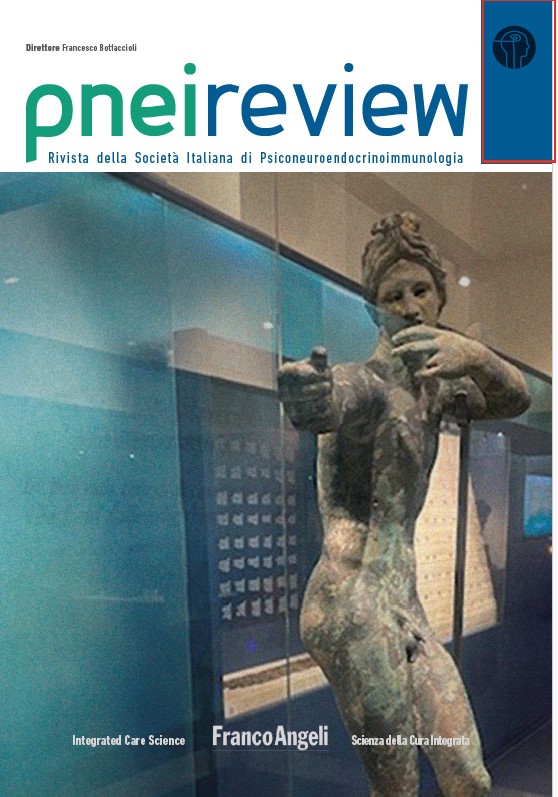
The integrated care needs of a philosophical paradigm. Psychoneuroendocrineimmunology can be it, provided that a consensus is created on its profound meaning. What is Psychoneuroendocrineimmunology (PNEI)? It is not Neuroendocrinoimmunology. PNEI (also called PNI, Psychoneuroimmunology) describes the relationships of mutual in?uence between the psyche and biological systems and between the whole organism and the physical and social environment, showing the scienti?c inconsistency of the reductionist dogma that makes the psyche a mere epiphenomenon of brain activity. We are in a phase of research that allows the de?nitive overcoming of the dualistic conception of the human being without falling into the trap of the mind-brain identity, in the reduction of the psychic dimension to the biological one, from which it undoubtedly originates but on which it in?uences. To this end, it is essential to critique the philosophical foundations of contemporary reductionism, while, at the same time, highlighting the theoretical-conceptual paradigm that underlies PNEI research and the practice of treatments that integrate medicine and psychology, which descend from this paradigm.