
L'età dell'incertezza
Insicurezza, sfiducia e paura nella condizione anziana oggi
cod. 1520.504
La ricerca ha estratto dal catalogo 104757 titoli
Insicurezza, sfiducia e paura nella condizione anziana oggi
cod. 1520.504
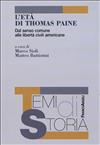
Dal senso comune alle libertà civili americane
Un gruppo di autori americani ed europei si interroga sul percorso intellettuale di Thomas Paine, confrontandosi con l’attualità del suo pensiero politico. Ne emerge la figura di uno scienziato delle idee, capace ancora oggi di parlare alla gente con delle parole che sono state fatte proprie persino da un presidente repubblicano come Ronald Reagan e da uno democratico come Barack Obama.
cod. 1792.170
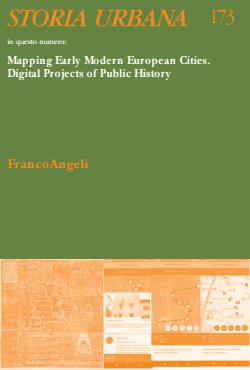
The golden age of Fiume: Urban and Maritime Expansion in the "Dualist" Period (1872-1914) - There is no better symbol of the strivings of Fiume’s cosmopolitan ruling class than the waterfront in the so-called dualistic period (1872-1914), its "Golden Age". Although Fiume started out with a small population and volume of trade, it was able to exploit the opening of new trading routes in the Mediterranean Sea as well as new rail connections. The Suez Canal had been opened and Fiume was chosen as the "port of Hungary". Thus a new harbor was created and linked through new railroad connection to Croatia and Hungary inland. Mayor Ciotta played a leading role in this climate of economic upheaval during his twenty-year tenure. Fiume’s architecture can serve as an index of Fiume’s transition from small to large scale and from a local to an international perspective. We can see this in the waterfront blocks - the residential buildings, the company headquarters, and the public buildings, such as the new grand Opera theatre, all of which epitomize the passage into a new urban panorama.
La "special relationship" angloamericana tra continuità e mutamento
cod. 1460.69
The development of legislation to establish the construction of cemeteries as public facilities in consideration of public health issues originated in France during the Age of Enlightenment. This concept began taking root in Sicily and in the South of Italy with a slight delay in comparison with the other European countries. Further, more substantial delays are due to the fact that some municipalities have never observed the rules issued by King Ferdinand I since 1817, nor those established by the new Savoy kingdom after the unification of Italy. In the outline of the events related to the creation of the cemeteries in Eastern Sicily, the events of Piazza (Armerina since 1862), one of the main centres of the administrative system of the island (it was district capital since 1812, then subintendency and seat of bishopric since 1817), represent an interesting case study for the reconstruction of a debate which started just after the Bourbon law and ended during the 1880’s with the opening of two separate public cemeteries.

This paper reconstructs the main features of Gianfranco Miglio’s political theory, which he elaborated during a long research career that began in the early 1940’s under Alessandro Passerin d’Entreves and Giorgio Balladore Pallieri. Although Miglio is mainly known for his radically liberal political activity, pursued in the 1990’s, this paper argues that these late and often consciously provocative positions were in contradiction, sometimes radically, with key points of his political reflection about «political regularities », conducted until the beginning of the 80s. Starting from this consideration, the paper highlights the existence, within Miglio’s intellectual itinerary, of an implicit contradiction between a rigorously positivist methodology and equally strong liberal and individualist cultural roots. The tension between these two roots generated his ideas about the growing importance of the market, relative to the state. With more radical consequences, the tension also led Miglio to reconstruct the logic of political obligation according to a model of utilitarian
La bussola di don Abbondio e il cavallo di don Chisciotte
Con questo saggio l’autore intende accompagnare il lettore nel suo viaggio attraverso il sentimento del coraggio e lo stato d’animo della paura. Un viaggio che non potrà che essere una sfida continua con se stesso e con gli altri.
cod. 1420.1.182
Through an analysis of the activism of the North Africa descendants from the suburbs in Paris region in the 1990s and 2000s, this article shows the plurality of their relationship to institutions (family, school, labor, government, police, justice, etc.). The study draws on a rich empirical material (forty one life stories of activists from three organizations, and focuses on difficult terrain often resistant to any sociological objectivation. Complementing the literature on the relationship to institutions of immigrant children, the approach microsociological, mesosociological and socio-biographic, by integrating personal stories in the analysis, the meaning that actors give to their actions, is fruitful because it renders an account of the impact of the structural and institutional factors, and the singularity of individual socializing experiences and various interactions that structure durably their relationship to institutions, while underlining at the same time, how they determine the differentiated forms of collective action.
Guardando all’etica della cura come ad una forma di moralità almeno potenzialmente universale che caratterizza l’essere umano in quanto tale, il volume indaga come questo particolare paradigma possa costituire un fertile terreno per ripensare al modo in cui interagiamo con gli animali non umani, a maggior ragione se la posta in gioco è l’alimentazione, un’attività quotidiana in cui si esplica tanta della socialità e relazionalità degli esseri umani.
cod. 1072.15

Modelli di organizzazione, gestione e controllo: verso la responsabilità sociale delle imprese
Il libro si propone di analizzare il legame tra redditività ed etica aziendale, considerando quest’ultima non un costo ma un investimento in termini di capacità competitiva, autorevolezza, integrazione sociale dei soggetti economici. In particolare si propone di guidare le imprese nell’attuazione dei modelli organizzativi e gestionali, previsti dalle L. 300/2000 e D.lgs. 231/2001.
cod. 1481.77
The ethics of law and tolerance - In the pluralism of values, tolerance is the absolute moral principle which grounds its technique for cohabitation upon rationalism. The law is the technique for the rational use of authority, while the technique of the law lies in the rationality of statute law and of case law. The quality of the legislative process and of the judicial process envisages the ethical intensity of the law: the ethics of the law lies in its techniques. The faults in legislative and judicial techniques explain Italian law’s ethical weakness. The irrational use of authority is not law, but is in fact no more than the wielding of strength
The Changing Work Ethic ABSTRACT: The aim of this essay is to speculate about the changing work ethic. It is divided in two synthetic parts. In part one I will discuss the changing workplace. In part two I will speculate about the changing work ethic hoping to stimulate further discussions. I do not pretend with this essay to include all the contradictions and work ethic changes of the workplace. It is well know that allover the world millions of workers do not have a job. For them the work ethic is not even part of their daily life. Lately the workplace is changing very fast thanks to the technological revolution and in social science we have to dedicate more attention to all these changes.
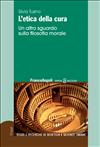
Un altro sguardo sulla filosofia morale
Il lessico della cura è sempre più presente nel dibattito pubblico contemporaneo. Che si parli di fine vita e dell’accompagnamento di persone con patologie cronico-degenerative, di questioni etiche correlate alla pandemia di Covid-19 o della gestione del cambiamento climatico, il riferimento alle categorie della vulnerabilità, dell’interdipendenza e della cura è pervasivo. Questo studio si propone di offrire un’introduzione all’etica della cura basata, da un lato, sulla ricostruzione della nascita del dibattito e l’analisi critica delle opere fondative e, dall’altro, sulla discussione di alcuni dei principali snodi teorici del dibattito contemporaneo. L’obiettivo è far emergere le risorse che una riflessione sulla cura può offrire per ripensare la filosofia morale oggi.
cod. 11614.3.1
