RISULTATI RICERCA

La ricerca ha estratto dal catalogo 105488 titoli

This paper analyses the contradictions and conflicts affecting two trends in the urban government and governance of Brazilian cities: the increase in the institutionalisation of practices for participation by civil society in the construction of public policies and the expansion of forms of urban entrepreneurial practices. The analysis focuses on the impacts that the 2014 World Cup and the 2016 Olympics are having on institutional spaces for socio-political participation and on processes for the organisation and strengthening of social movements at national level. Current dynamics are illustrated with a discussion of the literature and the use of data from surveys, official documents and those government websites and social movement websites that are particularly involved in urban development processes in cities connected with past and future mega sports events.

Giorgio Stefano Bertinetti

Changes in SMEs financing: risks and opportunities for agro-food companies

Economia agro-alimentare

Fascicolo: 2 / 2023

The financial and real crisis started in 2007-2008 has deeply transformed the way the Italian financial and capital market act. Italian SMEs need to be aware of the transformation not to be pushed out of the market itself and to take profit of the new relevant opportunities coming out thanks to the emerging new products and new intermediaries.The paper focuses the disappear of banks relationship lending and provides evidence about how to approach the market in the emerging “competing for capital” prevailing rule.It also stresses the relevance of ESG topics as emerging risk factor companies must look at when asking for new finance because of the Regulation (EU) 2019/2088 of the European Parliament and of the Council of 27 November 2019 on sustainability related disclosures in the financial services (SFDR).

Ryszard Kata, Magdalena Cyrek, Piotr Cyrek

Changes in the level and structure of food expenses in the European Union in the context of increasing household incomes

ECONOMIA AGRO-ALIMENTARE

Fascicolo: 3 / 2019

Changes in the consumption model are inherent in the processes of socio-economic development the indicator of which is the enrichment of the population. Such changes include the emergence of new proportions in the consumption of particular categories of goods and services, and, according to the regularities observed by Engel, lower the share of expenditure on a broadly understood category of food. Increasing incomes are also linked to changes in the internal structure of food consumption. This study is to assess the changes in the level and structure of food expenses resulting from the enrichment of the European Union (EU) societies. The study covered the co-occurrence of differences in food consumption with households’ income differences in the EU countries. The analyses presented in the study relate to the period after the EU enlargement in 2004 and are based on the Eurostat data. The research allows for a positive verification of the thesis that the higher the incomes, the more balanced the structure of food expenses. In more affluent economies, the consumption of a more diversified basket of goods is observed. This finding is supported by the high negative correlation between the structure concentration ratio for food expenditure and the households’ income level. In addition, the identification of country clusters based on consumption expenditure broken down into food categories makes it possible to confirm the thesis that there are income differences between economies with different consumption models. It is confirmed by the variance analysis concerning income level for countries in three groups: the South Europe with the highest food expenses, the Central and Eastern Europe with the most limited spending and the lowest income, and the affluent "old" EU members with high expenses on luxuries consumed for social reasons. However, the analyses presented here do not allow for validation of the thesis that food consumption patterns among the EU countries become similar, but rather point to the predominance of the consumption divergence processes, which occur despite the declining income differences. This claim is based on the observation of increasing average Euclidian distance between food expenses in the EU countries in 2005 and 2015. Nevertheless, some signs of shift towards Mediterranean consumption patterns may be found for many societies.

Vida Cesnuityte

Changing family model, social capital and caring: how to reconcile? the case of Lithuania

SOCIOLOGIA E POLITICHE SOCIALI

Fascicolo: Suppl. 3 / 2012

The aim of the research presented in the paper is to explore the inter-relations between care processes and personal social networks as social capital in the light of the changing family models. Research of interdependence of care, social capital and family models is based on the idea of family practices suggested by Morgan. The main research question is what family practices of various family models create such social capital that ensure caring for its’ members? The research hypothesis is that participation in various activities together with family members and persons beyond nuclear and extended family create dense social networks of caregivers. The analysis is based on data of representative quantitative survey carried out in Lithuania between 2011 November-2012 May within the ESF supported research project "Trajectories of family models and social networks: intergenerational perspective". Research results only partly support this hypothesis: particular family practices create networks of caregivers, but in order to involve particular persons into network of caregivers, different family practices in various family models are needed. Usually, inhabitants of Lithuania primarily expect to receive care from persons who depend to nuclear family created through marriage and extended family arisen from this relation. But persons from whom it is expected to receive care and care received differ in Lithuania. In reality, caregivers usually are children in families with children and parents in families without children. Family practices that create social networks of caregivers, and are common for all family models include annual feasts like Christmas Eve, Christmas, Easter, All Soul’s Day, New Year party, Mother’s Day. Various family practices differently impacting creation social networks of caregivers for different family models but usually its include joint dinner daily, Sunday lunch together, vacations with family, communication face-toface, by the telephone or Internet, consultations on important decision-making, All Soul’s Day feast, Christmas celebration, Mother’s Day, Gatherings of relatives, Birthday, Name-day feast, visiting cultural event together.

Antonia Cunti

Changing the school through emotions. The role of reflective teachers’ training

EDUCATION SCIENCES AND SOCIETY

Fascicolo: 2 / 2020

The theme of emotions and relationships at school in recent years is acquiring a growing space in pedagogical literature. Their centrality for the purposes of successful teaching and learning is ascertained by numerous studies and research of different disciplinary fields. From the point of view of teacher behavior, the emotional dimension is no longer linked to character aspects but to specific skills that all teachers should possess. First of all, it is fundamental to know how to recognize one's own and others' emotions and to be able to manage them within the educational and didactic relationship. Teaching is a profession of high emotional intensity and, therefore, it is essential to train teachers to become aware of the emotional exchanges that take place within the classroom and to be able to direct them towards conditions of well-being for the students and for themselves. The goal of teachers education is to provide teachers with a reflexive habit that can act as a fulcrum for their constant personal and professional development and to establish a subjective space for «thoughtfulness», which represents a space for reflection and creativity.

Stefano De Falco

Changing urban geographies through the suburbanization of universities. A case study of Naples, Italy

ARCHIVIO DI STUDI URBANI E REGIONALI

Fascicolo: 125 / 2019

Although many studies consider knowledge-based urban development processes, the multiple functions that universities can play in suburban areas are rarely taken into account. This paper has a dual aim. First, it provides a systemic view of the characteristics of universities that impact suburban areas, and second, it proposes Naples as a case study wherein university suburbanization is a phenomenon that results in the creation of new urban geographies characterized by new suburban externalities.

Chaos in the "Forward-looking Expectations-augmented Phillips Curve" with "Price Catch-up" (di Luciano Fanti) - ABSTRACT: In this paper we investigated the dynamical properties of a text-book "expectations-augmented Phillips curve" model with the forward-looking behaviour argued by Phelps and Friedman, extended with a pro-cyclical mark-up. The main results are that far-sighted forward-looking agents can destabilise the neoclassical labour market and that "saddle-path stability" can never occur; this can be considered another example of "indeterminacy" of the Walrasian equilibrium. Moreover, including compensation for past unexpected inflation, persistent oscillations and chaotic behaviour (very robust as well as very realistic) appear, interestingly when agents tend towards perfect foresight. When convergence to the Walrasian equilibrium fails, the emergence of a chaotic attractor produces a ‘Phillips curve’ - type behaviour as a true long-run phenomenon. Therefore on the one hand we showed that the Phelps-Friedman’s view of the Phillips curve with an endogenous price inflation section, may generate an ‘indeterminate’ as well as unstable labour market equilibrium. However, on the other hand, the criticism levelled by Phelps-Friedman at the use of the Phillips curve as a policy tool is confirmed here to the extent that the long-run Phillips curve is only the result of the existence of a chaotic attractor.

Simone Aparecida Capellini, Aldo Caldarelli, Giseli Donadon Germano, Catharina Vechiato Cristante, Ilaria D'Angelo, Noemi Del Bianco, Catia Giaconi

Characterization of gaze in handwriting of High and Low Frequency Word of Schoolchildren with Dyslexia

EDUCATION SCIENCES AND SOCIETY

Fascicolo: 2 / 2022

Writing is extremely important for our academic and professional life and can affect our performance in productive educational activities, favouring us or not. Schoolchildren with dyslexia bring difficulties and reduced school performance due to their condition of deprivation in written production. This is because schoolchildren with dyslexia have difficulty acquiring spelling knowledge and show poor phonological skills. This study aimed to characterize the performance of schoolchildren with dyslexia in “gaze” for the handwriting of High and Low-frequency words. A total of 24 schoolchildren participated in the study. They were between 8 to 11 years and 11 months of age, of both sexes, and they were attending the 3rd to the 5th year of Elementary School in the city of Marília-SP. The schoolchildren were divided into groups: GI, composed of 12 schoolchildren with an interdisciplinary diagnosis of developmental dyslexia, and GII, composed of 12 schoolchildren with good academic performance, paired with GI according to the school grade level. These schoolchildren were submitted to computerized handwriting evaluation using a Brazilian adaptation of the Software Ductus. All schoolchildren were submitted to a copy of words already selected according to Brazilian Portuguese criteria of frequency and codification rule. A measure of “gaze” was used, that is, when the schoolchildren stopped their handwriting to search/look up at the screen to confirm the information about the words. The results indicated a significant difference between GI and GII, with GI schoolchildren performing more gaze when compared with GII, i.e., taking longer motor breaks to perform the gaze. Therefore, there was a rupture in the central processing with the peripheral when the child performed the gauze more times since he had to confirm the characteristics of this word during the writing process (difficulty in accessing the orthographic lexicon) and with that, there was a break in the movement of handwriting (since there was not enough information in the central plane to complete that motor memory and finish the word). It was concluded that there were gaps between the central (orthographic) and peripheral (motor pauses) processes, suggesting deficits in the formation of motor programs for GI and the lack of automation of motor processes.

Gerald Turkel

Charisma and everyday ethics: Fred Rogers and the power of example

SOCIOLOGIA E POLITICHE SOCIALI

Fascicolo: 2 / 2019

Fred Rogers was a major television personality in the United States in the last half of the twentieth century. He was a critic of commercial television that provided loud, silly, violent, and consumption-oriented programming, especially children’s shows. On Mr. Rogers’ Neighborhood, broadcast on national public television, he provided an alternative to dominant forms of children’s television shows. His show focused on the emotional experiences of children and sought to provide them with a safe, intelligent, and quiet experience. This paper aims to analyze Fred Rogers approach to television through Weber’s concepts of charisma and responsibility. After formulating alternative types of charisma and their core aspects, it focuses on the everyday ethics professed by Fred Rogers’ and how they were given force and meaning through both his personal representation of them and through their dramatic representation on his show.

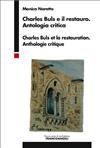
Monica Naretto

Charles Buls e il restauro - Antologia critica

Charles Buls et la restauration - Anthologie critique

Una riflessione sul contributo di Charles Buls – viaggiatore, pubblicista, esteta, borgomastro della città di Bruxelles – al dibattito sul restauro, attraverso la disamina dei testi raccolti in questa antologia e la perlustrazione critica dei suoi carteggi e appunti di studio.

cod. 1098.2.22

Mario A. Di Gregorio

Charles Darwin’s unpublished material. The marginalia

PARADIGMI

Fascicolo: 3 / 2012

Il mio amico Nick Gill e io abbiamo dedicato più di vent´anni di lavoro a redigere l´edizione dei Marginalia di Darwin, cioè i commenti di CD mentre leggeva ciò che leggeva. La biblioteca di Darwin era stata divisa da lui stesso in due gruppi, i libri e i cosiddetti "pamphlets", articoli, estratti e libri brevi. Abbiamo trovato anche estratti scritti a mano di libri non posseduti da CD e le sue copie del Gardner´s Chronicle. È come se avessimo "visitato" la mente di Darwin ripercorrendo il cammino seguito nella sua vita di studi. Abbiamo potuto perciò ricostruire: le abitudini di lettura di CD; le sue reazioni a quello che leggeva; i "temi" usati come fili conduttori, cioè complesse strutture intellettuali che costituiscono le fondamenta delle sue teorie e che diventano palesi nei suoi scritti. In questo modo il Darwin "privato" dei Marginalia dà un senso più compiuto al Darwin "pubblico" della Origin of Species e delle altre sue pubblicazioni.

Massimiliano Vaghi

Charles de Bussy e gli avventurieri "francesi" in India (1746-­1806)

SOCIETÀ E STORIA

Fascicolo: 174 / 2021

Nonostante sia impossibile considerare l’antico impero coloniale della Francia come un insieme omogeneo, l’Autore sostiene che nel subcontinente indiano vi sia una sostanziale continuità fra le politiche asiatiche di Antico regime e quelle della Rivoluzione. In India, in particolare, la rivalità coloniale e commerciale con la Gran Bretagna, infatti, ha prevalso sulla politica rivoluzionaria, con una prassi che è rimasta nella sostanza invariata. In questo articolo si fornisce un approccio comparatistico dell’attività politica e militare degli ufficiali e aventuriers francesi nel contesto delle guerre anglo-franco-indiane. In particolare ci si sofferma sulla figura di Charles de Bussy (1718?-1785), ufficiale della Compagnie des Indes e quindi governatore generale francese in India, tentando di raffrontare la sua politica indiana sia con quella del suo più celebre contemporaneo Joseph-François Dupleix (1697-1763), sia con quella degli avventurieri "francesi" che hanno operato al servizio dei sovrani indiani fra il 1763 e il 1806

The affirmation of sovereignty is a long process. Legitimized by hereditary rights or by acts of military conquest, sovereignty requires effective consol idation strategies, which contemplate material and immaterial elements, linked to the manifestation of force but also to the integration of the élites. The construction of the Royal Sites assumes this purpose for the Bourbons when they become sovereigns of the Kingdom of Naples. These Sites, which expand radially around the capital, have multiple functions: control of the territory, contrast to the non-aligned nobility, place of entertainment for the royal family, magnificence of the king and his court, with all the set of symbols, ceremonials. But the Royal Sites also allow to carry out concrete operations to relaunch the territory through urban, architectural and landscape interventions. At the same time, the Royal Sites arrive to convey a particular form of "court": a "decentralized court", whose politicalinstitutional and representative functions follow the itineraries of movement of the monarch and his family, with servants, accomplices, dignitaries and ministers, archives and officials. An emblematic case is offered by the Royal Palace of Caserta, which brings together all the typical functions of the Royal Sites.

In this article, the Author aims to critically piece together some Peircean responses to Cartesian scepticism, evaluating both their robustness and whether they might be of any use against contemporary formulations of the sceptical challenge. First, the Author analyses the 1860s Peircean answer to what can be considered the first kind of Cartesian scepticism - which arises, according to Peirce, from Descartes’ theory of intuition and regards the unknowability of reality - and holds that such an answer is not satisfactory since scepticism, after being put out through the door, comes back in through the window. Second, the Author examines Peirce’s arguments on doubt and belief and claims that they represent a powerful questioning of what can be considered the second kind of Cartesian scepticism, which arises from Descartes’ method of doubt and entails that we should always be sceptical about the truth of our beliefs. Finally, the Author shifts attention from the doubt-­based scepticism that Peirce was criticising to contemporary sceptical positions employing a closure principle and argues that Peircean statements on doubt and belief can be employed to build an effective counter-­argument to such sceptical claims.