RISULTATI RICERCA

La ricerca ha estratto dal catalogo 105486 titoli

Questo saggio indaga la relazione fra circolarità e la questione del ritorno prendendo in esame il caso delle donne straniere impiegate in Italia nel settore domestico e della cura. Nel confronto fra le prospettive di donne ucraine e donne polacche emerge come la circolarità possa combinarsi con momenti diversi del ciclo migratorio: per le ucraine la circolarità rappresenta una strategia per rimandare il ritorno definitivo in patria, dopo anni di permanenza stabile in Italia; per le polacche si tratta invece di una caratteristica della propria migrazione verso l’Italia fin dall’inizio, per attenuare il distacco dal proprio paese. La libertà di movimento all’interno dei confini dell'Unione europea che hanno le polacche in confronto alle ucraine è dirimente nello spiegare il diverso significato che la circolarità assume nelle traiettorie di queste donne. Vedremo tuttavia che esistono anche delle forti comunanze fra i due gruppi quando si guarda alle motivazioni che le spingono a ricercare una mobilità di tipo circolare.

Elvira D’amico

Circolazione di ceramiche a Messina durante il Basso Medioevo. Aggiornamenti e dati di sintesi

ARCHIVIO STORICO PER LA SICILIA ORIENTALE

Fascicolo: 1 / 2020

Aggiornamenti e dati di sintesi Le ricerche archeologiche portate avanti negli ultimi decenni dalla Soprintendenza ai Beni Culturali di Messina permettono di tracciare le prime linee di un quadro che si presenta di estremo interesse e che rivela sempre più chiaramente il ruolo di protagonista rivestito dalla città dello Stretto all'interno del sistema economico del Mediterraneo basso medievale. Le ceramiche, d’importazione e di produzione locale, confermano il sincretismo culturale che caratterizzò tale periodo, spia di un’economia vivace, ricca di scambi e di trasmissioni di saperi e tecniche.

Giovanna Canciullo

Circolazione di modelli e linguaggi politici tra la Sicilia e l’Europa. La rivoluzione in biblioteca

ARCHIVIO STORICO PER LA SICILIA ORIENTALE

Fascicolo: 1 / 2017

Il saggio analizza la circolazione di modelli e linguaggi politici tra Sicilia ed Europa. Attraverso l’originale punto di osservazione delle biblioteche dei protagonisti della scena isolana vengono ricostruiti i tempi e le modalità di recezione della pubblicistica internazionale, e la sua diffusione ad opera delle élite locali. Viene così restituito il profilo di una Sicilia dinamica, al centro di una vera e propria rete mediterranea di parole e di carta: tutto ciò permette la nascita della moderna opinione pubblica e lo sviluppo di un vivace dibattito internazionale, cassa di risonanza per le aspirazioni delle élite locali, cresciute nell’alveo del pensiero cosmopolita dell’Illuminismo e convinte della necessità di superare il capestro dell’ancien régime, tuffandosi incontro alla modernità.

Manfredi Merluzzi

Circolazione di uomini, imprese militari alle frontiere del Regno del Perù

CHEIRON

Fascicolo: 1-2 / 2020

Il controllo delle aree di frontiera, specialmente nei domini particolarmente lontani, come quelli dell’America Meridionale, non del tutto pacificati, costituiva una difficile sfida per la monarchia spagnola. In questo contributo si intende verificare, attraverso due fonti coeve, scritte da militari con una lunga esperienza al servizio del sovrano spagnolo, diverse proposte di soluzioni. Le aree trattate riguardano il vicereame peruviano, nell’area novogranadina e i territori transandini, Chaco e Tucumán. Si analizzerà il trattato di Vargas Machuca che costituisce una fonte preziosa per la comprensione del fenomeno e permette di evidenziare modalità strategiche per la pacificazione delle etnie indigene "non pacificate" lungo la frontiera del vicereame.

Circolazione stradale

DIRITTO, IMMIGRAZIONE E CITTADINANZA

Fascicolo: 1 / 2006

Ministero trasporti 20.3.2006 - cittadini extracomunitari con permesso di soggiorno in corso di rinnovo - rilascio docu-menti di guida e di circolazione - chiarimenti

This article presents the findings of a research project on the experiences of negotiated planning in the Puglia region. A questionnaire has been used to gather data with 171 entrepreneurs that participated in the Pacts of Lecce, Nord Barese Ofantino and Polis. The aim is to analyse whether and in what ways negotiated policies have managed to start an effective learning process that implied new economic strategies and actions from the actors involved. Specifically, on the basis of statistical analyses, the article seeks to verify whether participation to the Pacts has had some effects on entrepreneurs’ relational and cooperation abilities.

Simona D'Amico, Anna Irene De Luca, Giovanni Gulisano

Circuiti di produzione e consumo "alternativi" per l’organizzazione del sistema agro-alimentare calabrese: un quadro introduttivo

ECONOMIA AGRO-ALIMENTARE

Fascicolo: 2 / 2013

The work aims at formulating hypothesis on the actual alterity (Kirwan, 2004) ofthose realities that either define themselves or have been considered in the Calabriapolitical, social and scientific contexts as examples of "filiere corte", that is as foodpractices characterised by the afn (Alternative Food Networks) features, in the waythey have been defined by the international scientific literature. The study rises fromthe need to avoid the "conceptual conflation" (Tregear, 2011), which biased the fncomprehension at the international level and is finding a fertile land within theItalian scientific and empiric reality where scholars discuss the "filiere corte" initiativesin the frame of the afn studies although warning on the possibility ofoverlapping existing practices typical of an agri-food system that is not completelymodernised (Malassis & Ghersi, 1998; Rossi et al., 2008). Concerning this last pointCalabria doesn’t lag behind requiring an investigation on the actual nature andalterity of those realities framed among the "filiera corta" initiatives.Favouring a theoretical frame that allows considering the existing realities asdynamically interacting, rather than opposing each other, Convention Theory is thetheoretical starting point operationalized through the Granovetter (1985) concept of "emebeddedness": "filiere corte" are identified as one of the possible conventionsorganizing the Calabria agri-food system and shaping in the relation with the otheragri-food, political and social systems. After an empiric analysis, three generaltypologies have been identified among those either self-defined or recognised as"filiere corte": Farmer’s Market, GAS and GODO. Moreover three hypothesis ontheir technical, social and political "alterity" have been introduced: in the first case itcould derive from their ability to close the food chain, merging supply and demand;secondly it could be founded on their capacity to stimulate local form of socialcooperation; third they seem to require an innovative participatory approach in orderto be politically framed. Each of the three hypothesis are theoretically elaborated andrequire further empirical tests.
Gian Paolo Cesaretti, Irene Paola Borrelli, Immacolata Viola

Circular economic analysis for Sustainability

RIVISTA DI STUDI SULLA SOSTENIBILITA'

Fascicolo: 1 / 2021

Overcoming the current development model, universally deemed unsustainable, requires, in the various Territorial Systems, the implementation of a strategy based on four components which are closely interconnected: Supporting sectors (research, training and communication); Business production and investment models; Household consumption and savings models and No profit Institutions decision-making models. Strategy which, based on policies acting symmetrically on the four components mentioned above, is capable of guiding and supporting the Society towards a growing balance between intra-generational and inter-generational equity. In the present paper, the authors have highlighted the centrality of the Territorial Capital for the achievement of a Sustainable Wellbeing; analyzed the path towards Agenda 2030, which has finally codified this centrality; presented a Circular Economic Model proposed to analyze the determinants of "circularity" of Well-being. Finally, the criteria are defined for an impact analysis of the new policies that are emerging at international, european and national level for building a sustainable future.

Sebastiano Patti

Circular economy and sharing consumption: Attitudes towards low-carbon tourism

ECONOMICS AND POLICY OF ENERGY AND THE ENVIRONMENT

Fascicolo: 1-2 / 2017

The paper focuses on attitude towards circular economy and low-carbon tourism (CE and L-CT) by investigating consumption behavior of people who use sharing utilities. Attitudes towards CE and L-CT concern ecological, socio-economic and developmental impact. Low-carbon tourism helps to reduce water, electricity and other energy consumption as well as waste and contribute to reduce greenhouse gas emission such as carbon dioxide. The requirements of CE and L-CT are transportation, consumption, accomodation and less travel footprint (Yang, 2015). Different motivational factors affect tourists’ behavior in sharing goods and services, such as environmental protection, lower costs, research of a sustainable style of lyfe, wellness and so on. The study examines how consumer behavior can influence CE and L-CT attitude and how the former can be a determinant of the latter. It explores also motivations to share utilities and the knowledge and sensibility towards circular economy.

The paper deals with circular economy and green public procurement. More specifically, it is aimed at studying in depth the role that GPP can act in the construction of this new economic model. Moreover, it is also aimed at evaluating the contribution that Italy could actually give to reach such ambitious goal. In order to do that, first of all the paper analyses some important international and European documents (i.e. UN Urban Agenda; Pact of Amsterdam). Secondly, the study pays particular attention to the 2014 European Directives on public contracts as well as to the new Italian public contracts’ Code (legislative decree n. 50/2016). Finally, the study argues that GPP can actually be a very useful tool for the purpose of the circular economy’s realization and that, in this respect, the Italian le-gislation is even more advanced and effective than the European one, at least for some aspects (i.e. art. 34 legislative decree n. 50/2016).

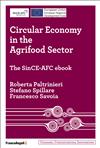
Roberta Paltrinieri, Stefano Spillare

Circular Economy in the Agrifood Sector

The SinCE-AFC ebook

This book results from the project Interreg Europe SinCE-AFC, which aims to provide horizontal mechanisms to enhance the capacity of Small and Mediumsized Enterprises to implement new production models and contribute to sustainable growth in the agrifood sector in the European Union. The main goal is to elaborate on theoretical and practical aspects of the circular economy in this sector, introducing the concept and its limitations, outlining the regulatory framework and the recent policy developments.

cod. 10266.4

Raffaela Nastari, Sabrina Pisano, Matteo Pozzoli

Circular economy in the food industry. An analysis of Italian-listed companies’ sustainability reports

FINANCIAL REPORTING

Fascicolo: 1 / 2025

Purpose: The paper investigates the circular economy (CE) disclosure released by companies in response to the issuing of CE-related policies since the CE Action Plan 2015, using the institutional view of legitimacy theory. Design/methodology/approach: The study adopts a multiple case study methodology by content-analyzing the CE disclosure released by all listed Italian agri-food companies in their sustainability reports in the period 2016-2021. Findings: The findings show that Italian agri-food companies released low levels of CE disclosure. This result suggests a lack of strategic relevance attributed to the CE issue or the absence of CE-related standards to rely upon. The results could also reveal companies’ scarce implementation of CE business models. The findings also show an increase in both the quantity and quality of CE disclosure released in response to the issuing of a public CE-related policy or framework, supporting the theoretical arguments of the institutional view of legitimacy theory. Originality/value: In light of the worldwide increasing attention toward environmental issues and the CE paradigm, particularly in the food industry, this study is the first to investigate the CE disclosure released by agri-food companies in response to the issuing of CE-related policies and voluntary frameworks. Practical implications: The findings show that institutional pressure through the issuing of new CE-related policies and voluntary frameworks promotes increased CE disclosure by companies, suggesting that implementing both Directive 2022/2464/EU and the EFRAG standards would further encourage the release of CE disclosure.

Dream D. Cazzaniga, Giulia Detomati

Circular economy: Implementing a small-scale project in a rural area

ECONOMICS AND POLICY OF ENERGY AND THE ENVIRONMENT

Fascicolo: 1-2 / 2017

The Circular Economy (CE) is one of the most recent theoretical framework for identi-fying sustainable solutions to the environmental threats posed by our economic system. In certain countries, both the private and public sectors have increasingly introduced this concept into their strategies and policies. Despite the widespread consensus and outreach of this model, there are still some key issues to be addressed in relation to project implementation and assessment. Through the analysis of a small-scale project in Northern Italy, the authors have chosen a practical case study to highlight a number of the main perspectives on how to operationalize CE. In particular, they provide an analysis of the project methods and results in order to understand the winning choices as well as the major constraints in putting the model in practice. In the conclusion the authors identify certain areas of intervention to be considered for effective implementation and enduring systemic change. Some measurement and monitoring instruments are also suggested to facilitate the achievement of the CE’s overarching goals in the long-term.