RISULTATI RICERCA
La ricerca ha estratto dal catalogo 104763 titoli
Come coesistono i principi storici della produzione di massa con le esigenze di mercati sempre più dinamici che spingono verso modelli produttivi flessibili e veloci? Il volume tenta di rispondere attraverso un’analisi dell’evoluzione dei sistemi produttivi. Un testo per studenti di economia e di ingegneria e manager che vogliano approfondire i temi della gestione della tecnologia e della produzione.
cod. 367.69

Romania and the Balkan Minorities in the European Union ABSTRACT: When Romania and Bulgaria joined the European Union on 1 January 2007, the event obliged a comprehensive reappraisal to be made of certain problems that had only been tackled piecemeal in previous years. This article is divided into two parts and is restricted to examining the main problems related to Romania, extending some analyses to apply to the minorities in the entire Balkan area. In numerous cases, the author was able to access original Romanian documents. The first part of the article defines certain general concepts to be used later on: what is meant by intra-community immigration and by minority. It then provides data about the history of Romania, the formation of its minorities and two problem-prone results of the state’s recent territorial evolution, i.e. the formation of the Republic of Moldova and of the unrecognised state of Transdniestria. The fact is that their proximity to the trouble spots in the Caucasus and, therefore, to Islam, and the permeability of their borders constitute an open sore for the European Union. The second part examines the connection between minorities and migratory trends in present-day Romania: in particular, the Hungarian minority (the source of decades of friction with Hungary) and the Rom minority (also a source of problems inside Romania and pushed to emigrate by the increasing degree of domestic insecurity). Romania is trying to shield the Rom against this insecurity by using police measures (examined here in detail) and a schooling policy that also takes the linguistic requirements of its numerous minorities into account. The last two paragraphs are then dedicated to Romanian migration towards the other member states of the European Union and, in particular, to the legal problems that have arisen in Italy in the transition phase: there are many Romanians who made their way into Italy as illegal immigrants and, as such, are now subject to criminal proceedings; yet in the meantime they have become European Union citizens, so some judges are questioning whether they can still be prosecuted for the crime of illegal immigration.

Romania and the Ukrainian Great Famine 1932-33 - The paper illustrates how Romania perceived the Ukrainian great famine of the years 1932-33 (holodomor) through the analysis of unpublished documentary material, coming from the archive of the Ministry of Foreign Affairs of Bucharest. At that time, Romania and Soviet Union did not have formal diplomatic relations. However, thanks to the reports of the military authorities working at the borders with the Soviet Union and thanks to the narrations of the Romanian diplomats, located in the bordering countries around the Ussr, the Romanian government could fully understand the tragedy that was upsetting the Ukrainian provinces and the Caucasus region. In this work a special attention is given to the narrations of hundreds of refugees who succeeded in crossing the Dniestr river and in finding a shelter in the Romanian territory. Their testimonies, gathered by the Romanians officials, were clear in proving the criminal nature of the famine, that was designed to undo the farmers’ resistance to the collectivization of the fields and to politically and culturally subdue the non Russians nationalities inside the Urss.
Key words: Romania, Ussr, Ukrainian Great Famine, refugees, Holodomor, international relations.
Parole chiave: Romania, Urss, grande carestia, rifugiati, holodomor, relazioni internazionali. Mondo contemporaneo

Alla luce dei continui cambiamenti nel mondo del turismo del vino, il volume analizza il fenomeno dell’enoturismo “globale”, frutto di un consumo sempre più critico di un servizio e di un prodotto che si devono presentare di alta qualità. Il testo passa in rassegna gli studi sul fenomeno enoturistico, analizza il turismo del vino mondiale e presenta alcuni casi studio.
cod. 365.866
La rivoluzione verde e le politiche agricole a essa collegate hanno significato un aumento nella produzione di cibo a livello mondiale, ma sono state anche causa di un’ulteriore dipendenza dei paesi del Sud del mondo nei confronti di quelli del Nord: hanno, in questo modo, contribuito all’esaurimento di risorse biologiche e al degrado di intere aree naturali. Ciò ha determinato, come nelle zone della Mesopotamia, una radicale modifica dell’habitat del territorio. La popolazione indigena degli arabi delle paludi, Arab al-Ahwar ha subito violentemente gli effetti di queste politiche agricole scellerate che, congiuntamente a motivi razziali, hanno generato un progressivo esodo da queste terre.


La rivoluzione silenziosa
Evoluzione demografica e tendenze future del continente asiatico
cod. 1460.62

La rivoluzione satellitare.
Come Sky ha cambiato la televisione italiana
cod. 1381.1.11
On April 25 2014, Portugal celebrated the 40th anniversary of the defeat of the right-wing Estado Novo dictatorship and the end of the colonial war, and the beginning of the period called Prec (Processo Revolucionário em Curso). Four decades later, the commemoration of the Carnations Revolution offers a useful perspective for investigating several issues related to the construction of Portuguese national identity – a process in which the history and memory of the Estado Novo as well as the interpretation of the Revolution have played a significant role. Key words: Portogallo, Carnation Revolution, Estado Novo, National identity, Anniversaries

The essay analyzes the concept of revolution in the philosophical jacobinism of Kant’s democratic critic, Johann Adam Bergk. In the democratism of this thinker, characterized by the theoretical predominance of duty over right, revolution represents one of the most considerable moral duties among those of which political liberty consists. Conceiving the political relationship between rulers and citizens as a duty relationship, Bergk assignes to revolution the same moral function of state coercion: the re-establishment of violated justice. On these bases, going even beyond the jacobinism of a Fichte, Bergk proposes the constitutionalization of the revolutionary act.

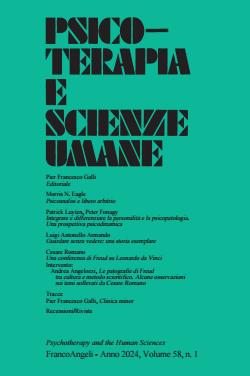
Revolution in mind: on the history of psychoanalysis, 1870- 1945 - In opposition to the traditional historiography of psychoanalysis, based essentially on biographies, the creation of psychoanalysis is seen as both a body of ideas and a movement that can be better understood by focusing on the way this field constituted itself, broke apart, and then rebuilt itself prior to World War II. Outlining the argument of the author’s book, Revolution in Mind: The Creation of Psychoanalysis (New York: HarperCollins, 2008), it is argued that a distinct Freudian theory emerged from Freud’s engagements with three pre-existing fields: French psychopathology, German biophysics/psychophysics, and sexology. As Freud pulled them together in an new synthesis, followers from these fields found their way to him. But a series of schisms shattered Freud’s fragile movement. After World War I, a new community emerged that was more "psychoanalytic" than "Freudian". It placed less emphasis on Freud’s authority, and instead emphasized technique and professionalization. World War II led to the destruction of these communities and sparked battles for control in the two major centers that remained, London and New York.

La rivoluzione necessaria.
La crisi economica vista da un imprenditore
Partecipare a decisioni senza disporre della conoscenza necessaria fa crescere la demagogia e non la democrazia. È quindi necessario “inventare” un meccanismo economico-istituzionale compatibile con le nuove istanze partecipative; è questa la strada per uscire dalla crisi. L’autore cerca di individuare le strategie per raggiungere tale obiettivo e le ragioni per cui in passato non è stato possibile, mentre dovrebbe diventarlo oggi all’interno della nuova realtà economico-sociale.
cod. 2001.110