Anger, indignatio, vindicatio: ethics, psychology, and theology in medieval reflection on indignation
Journal title RIVISTA DI STORIA DELLA FILOSOFIA
Author/s Silvana Vecchio
Publishing Year 2026 Issue 2026/1
Language Italian Pages 12 P. 30-41 File size 118 KB
DOI 10.3280/SF2026-001003
DOI is like a bar code for intellectual property: to have more infomation
click here
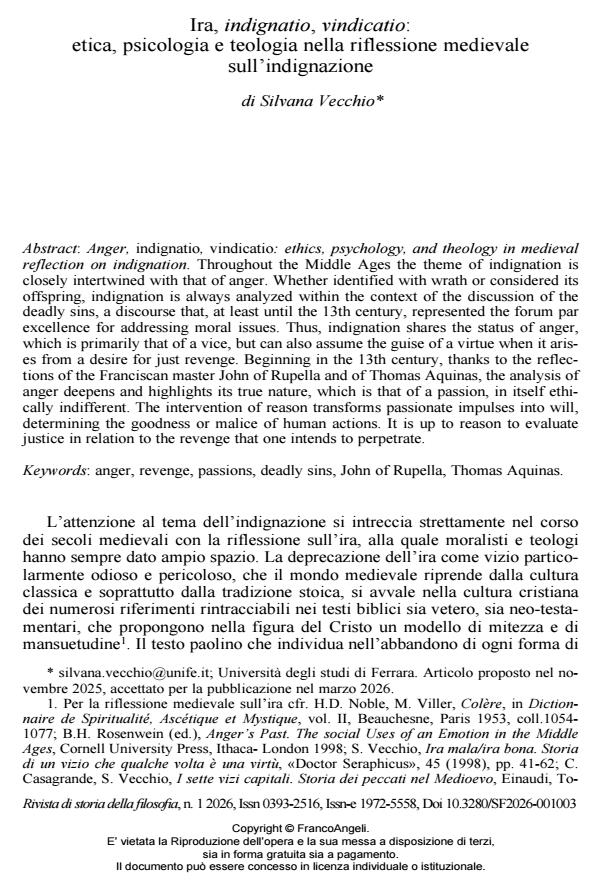
Below, you can see the article first page
If you want to buy this article in PDF format, you can do it, following the instructions to buy download credits
FrancoAngeli is member of Publishers International Linking Association, Inc (PILA), a not-for-profit association which run the CrossRef service enabling links to and from online scholarly content.
Throughout the Middle Ages the theme of indignation is closely intertwined with that of anger. Whether identified with wrath or considered its offspring, indignation is always analyzed within the context of the discussion of the deadly sins, a discourse that, at least until the 13th century, represented the forum par excellence for addressing moral issues. Thus, indignation shares the status of anger, which is primarily that of a vice, but can also assume the guise of a virtue when it aris- es from a desire for just revenge. Beginning in the 13th century, thanks to the reflec- tions of the Franciscan master John of Rupella and of Thomas Aquinas, the analysis of anger deepens and highlights its true nature, which is that of a passion, in itself ethi- cally indifferent. The intervention of reason transforms passionate impulses into will, determining the goodness or malice of human actions. It is up to reason to evaluate justice in relation to the revenge that one intends to perpetrate.
Keywords: anger, revenge, passions, deadly sins, John of Rupella, Thomas Aquinas
Silvana Vecchio, Ira, indignatio, vindicatio: etica, psicologia e teologia nella riflessione medievale sull’indignazione in "RIVISTA DI STORIA DELLA FILOSOFIA" 1/2026, pp 30-41, DOI: 10.3280/SF2026-001003