Design International - Open Access

DESIGN INTERNATIONAL SERIES

Direction: Silvia Piardi

Scientific Board:
Alessandro Biamonti, Alba Cappellieri, Mauro Ceconello,
Claudio Germak, Ezio Manzini, Carlo Martino, Francesca Tosi,
Mario Piazza, Promil Pande, Angelica Ponzio, Yingchun Zang

Editorial Board:
Alessia Brischetto, Alessio Caccamo, Barbara Camocini,
Giuseppe Carmosino, Eugenia Chiara, Andrea Di Salvo,
Silvia Gramegna, Shashwat M. Pande, Gustavo Alfonso Rincon,
Fabiano Scherer, Daniela Selloni, Davide Spallazzo, Livia Tenuta

The Design International series was launched in 2017 as a place for cultural exchange between the different design souls. Over the years, the series has consolidated its position as a point of reference for international research, outlining a continuously updated research map.
The Scientific Committee, consisting of experts in fashion, interiors, graphics, communication, product, service, social interaction, innovation and emotional design guarantees the level of the accepted texts. The Editorial Board, consisting of young experts in the different branches of design, supports the work of the scientific committee. After an initial evaluation by the two committees, the texts undergo international double revision.
(read all)

Peer Reviewed series

The search has found 56 titles

Anna Barbara, Anthony Perliss

Invisible Architecture

The Experience of place through smell

The authors dig deep into the unexplored, yet profound, relation between place and smell: Invisible Architecture is a groundbreaking exploration of the most invisible of our senses, and its seemingly infinite applications in the world of design and architecture.

cod. 10319.24

Alessia Brischetto

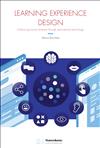
Learning Experience Design

Embracing human diversity through educational technology

Starting with the knowledge related to Ergonomics in Design and design for inclusion, this book aims to provide an opened and integrated point of view to the disciplines of cognitive psychology, pedagogy and human-computer interaction. It configures as a flexible tool for understanding key aspects concerning the use of technologies and their effects, with special regards to the experiential dimension on a human scale, particularly tailored to weaker people.

cod. 319.10

Francesco Scullica, Elena Elgani

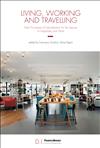
Living, Working and Travelling

New Processes of Hybridization for the Spaces of Hospitality and Work

The focus of this research is mainly on the relationship and the hybridization processes between hospitality spaces (mainly hotels and hostels) and workspaces for knowledge worker (offices, smart-office, co-working, hubs) in the field of interior design.

cod. 319.7

Anna Meroni, Daniela Selloni

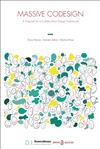
Massive Codesign.

A Proposal for a Collaborative Design Framework

This book focuses on “massive codesign”: the idea that multiple and/or numerous participants having different voices collaborate in a design process broken down into different steps and formats and resulting in a relevant and diversified amount of data.

cod. 10319.1

Marta Elisa Cecchi, Clorinda Galasso

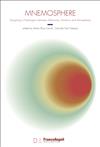
Mnemosphere

Designing a Neologism between Memories, Emotions and Atmospheres

This book is a collection of essays written by authors from different disciplinary and professional backgrounds, offering various points of view on Mnemosphere, which still does not have an unambiguous definition, drawing inspiration for considerations and insights: the interaction between the spheres of memories, emotions, and atmospheres.

cod. 10319.26

Giulia Gerosa, Andrea Manciaracina

Multiple-Scalarities

Environmental systems as a combination of interior design, services, communication and technologies

Interior design is less and less reduced to the mere physical component of space and is instead increasingly projected towards an ‘environmental system’ made up of space, services, communication, and technology. The book highlights the close interconnections between the design of spaces, the creation of services, the application of communication systems, and the exploitation of technologies, allowing us to reveal the tensions and interactions that are unleashed depending on the prevalence of one or another design discipline and the scale at which they take place.

cod. 10319.20

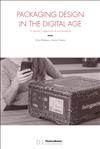
Silvia Barbero, Amina Pereno

Packaging Design in the Digital Age

A systemic approach to e-commerce

This volume offers a critical reading of Packaging Design in the Digital Age, tackling the issue of packaging for e-commerce and the strategies that designers can put in place with a view to sustainable innovation. Then the book explores the main types of e-commerce system to identify the existing material and immaterial flows and the related problems, from which the authors set out future systemic visions towards sustainable development. Case studies of packaging and e-commerce systems complement the different chapters to offer practical examples of innovation.

cod. 319.11

Alessandro Biamonti, Luca Guerrini

Polimi Design PhD_018.

9 PhD theses on Design as we do in POLIMI

The book is an overview on the wide field of research about Design, showing how Design is interpreted nowadays in POLIMI. Nine PhD theses. Nine young researchers. Nine 3-4 years researches carried on by people mainly under 35 years old, coming from all over the world. An international, young, dynamic community, which is approaching complexity of Design from several sides, but with the same passion for building a better world.

cod. 319.2

Nithikul Nimkulrat, Silvia Deborah Ferraris

Prototyping and Experiential Knowledge

Unfolding shifting views on the use of prototypes in design research

This volume examines the evolving role of prototypes in design research, emphasizing their function as intentional and transient objects that facilitate the transition from abstract concepts to concrete design outcomes. The book investigates how prototyping contributes to knowledge generation, design process development, and the articulation of experiential understanding.

cod. 10319.39

Venere Ferraro, Giorgia Burzio

Relive: novel design approaches to livingness

This book presents the results of the FARB (Fondo d’Ateneo per la Ricerca di Base) research project RELIVE, conducted within the Department of Design of Politecnico di Milano. RELIVE aimed to explore and conceptualize a framework for designing living artefacts. The objectives of the research are the conceptualization of original theory regarding livingness and the exploration of design-oriented approaches to craft living artefacts using living materials and digital technologies.

cod. 10319.34