
RISULTATI RICERCA
La ricerca ha estratto dal catalogo 105486 titoli
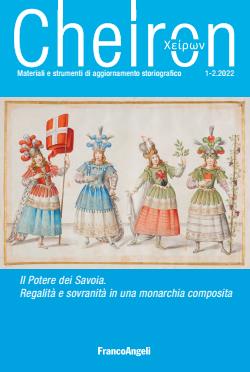
Il mecenatismo dei Dal Pozzo della Cisterna in qualità di feudatari di Cisterna d’Asti presenta episodi di rilievo tra XVII e XVIII secolo, specialmente dopo il conferimento del titolo principesco (1670). Fu commissionata la costruzione della zecca, attiva per un limitato periodo di tempo, e soprattutto ebbe luogo la trasformazione del castello da struttura fortificata, eretta in una posizione strategica, in dimora signorile. Questi episodi di committenza sono letti all’interno delle più ampie strategie di promozione artistica della famiglia nel corso dell’età moderna.

The conference of the Italian Regional Science Association (AISRe), held in September 2022 in Milan, provided a great opportunity to reflect on the local responses to the important challenges that European territories are facing, with a main focus on local and regional economic systems. It highlights some of the ways in which cities and regions are grappling with the transformative processes imposed by disruptive challenges, such as shifts in labour markets and working conditions, the increasing urgency of environmental concerns and the push for resource-efficiency and decarbonization.
cod. 11390.7
Processes involved in the production of knowledge have long been exiled to the interiors of extra-urban science parks. In recent times, the emergence of a new conception of knowledge as an open resource and of innovation as a non-linear and iterative process has stimulated a rethink of urban space as an alternative environment to the standard ‘islands of innovation’. The planning challenges that this involves for urban space result from the need to open up innovation processes to broader layers of urban society, while at the same time maintaining the operational closed nature of science parks. This paper examines the spatial structure that emerged from the meeting of the needs of a city - Barcelona - to attract high-tech innovative companies with the major urban regeneration project 22@ Bcn, discussed here as an attempt to create an new generation district for innovation.

Has the global pandemic innovated the relationship between health and urban planning? To answer the question, the contribution investigates two salient episodes of modern town planning in England and Italy that show how hygiene and sanitation have guided the transformation of the city. It then analyzes two movements of the ’90s that develop the issue of health interpreting it as wellbeing. The third part explores the reactions of some cities to Covid-19. The conclusions highlight a framework in which continuity rather than innovation prevail.
The aim of this paper is to examine the characteristics and the dynamics that characterize urban agriculture in the case of Rome. We summarize in an evolutionary approach the stylized facts of the relationship between town and the context of agricultural production in order to propose a taxonomy of the types of urban agriculture. The effort proposed here is a preliminary analysis of urban agriculture through a system of criteria for the classification of the distribution of the functional and relational features of agricultural activities in urban phenomenon. These interpretative categories attempt to reconstruct the causal relationships that translate agricultural production models (farms’ data, legal forms, use of natural resources, localization), in specific forms in the spatial and functional urban dimension - physical and social - and their role in territorial milieu. On the theoretical level this analysis is embedded in the co-evolutionary paradigm and looks to the landscape as the result of interactions between the environmental system and the action of human who lives and uses the territory. This typization ultimately still seems a goal to achieve, this is the first step towards the construction of an interpretative and vocabulary typological then be systematize with the morphological data and those of land use.
This paper looks at the changing communication environment of public sector organizations and examines how the traditional understanding of citizen engage-ment is becoming outdated. Building on literature on customer engagement from marketing and civic engagement from the field of political science, this article es-tablishes the process of citizen engagement in the public sector. Our propositions for future citizen engagement include the following: (i) a willingness and empow-erment to engage from both sides, (ii) the potential for either positive or negative manifestations, (iii) realistic expectations for outcomes, (iv) an understanding of its process-form and (v) having the aim of improving society. We tested these propo-sitions in the context of young opinion leaders in Finland in the Covid-19 related communication aiming to engage citizens to wear protective face masks. Our data confirmed the five propositions, and two new ones also emerged from the data: citizen engagement (vi) occurs in the global information environment and (vii) is enforced by others in society.
The debate on citizenship in health care is nowadays really important. Who is the “citizen”? What are the relationship between him/her, in terms of participation with the other healthcare professionals and health managers? The volume shows the complexity of these questions and goes deeper in the different roles played by the citizen: the care-giver/citizen, the activist/citizen, the expert/citizen.
cod. 1341.44

The purpose of this study was to analyse the health systems in Spain, Italy and Portugal from the perspective of the Southern European countries Social Protection. Through a review of the sanitary regulations, health plans and literature on specific health experiences, published in recent years in Spain, Italy and Portugal, the practices of participation, in these three countries, were studied. Some of the research results are noteworthy: a) Citizens’ participation in the decision making process on health has become the focus of attention of the public policies only after the 1990; b) there has been a significant progress in the regulatory framework and in the acknowledgement of users’ rights; c) the development and implementation of participatory mechanisms were insufficient and limited to certain regions.
This paper provides a comprehensive study assessing anthropogenic-related environmental risks for the coastal city of Limassol, Cyprus. The case of Limassol is interesting because it is characterized by an increased number of industrial activities, both varied and tightly concentrated in a relatively small geographic area. We initiate the research by looking at citizens’ perceptions for environmental threats through an extended opinion survey. We utilize the results of the survey to direct our research across 6 industries, involving 88 institutional stakeholders. For each sector, we map industrial activities to potential threats and qualify the risk level of each threat as the likelihood of risk realization times the impact to citizens’ wellbeing should the risk event occurs. We thereon identify areas in which threats are interactive and the corresponding risks synergistic. Our findings inform a range of policy recommendations for ameliorating man-made environmental risk for coastal cities. Discrepancies between citizens’ perceptions and actual data underscore the importance of effective risk communication.
The starting assumption is that intercultural dialogue, to be fruitful, must be developed from a basic code of values, that aside from being universal in character and therefore possible to share, must also be a trans-cultural facilitator. Arguably, the international law of human rights provides the axio-legal paradigm for the human-centric foundation of citizenship, then for its re-definition as plural citizenship whose references are no longer only the ius sanguinis and the ius soli, but primarily the ius humanitatis. It presents the human rights approach to citizenship ad omnes includendos, that is for the inclusion of all human beings, as "members of the human family" in a large and multi-level space. Indeed, the horizon for inclusive citizenship is much broader than the territorial dimension of the traditional nation-state; it is the European and world space of internationally recognised human rights. In this light, the European integration process and its political-legal system, being a laboratory of "constituent" activities, provide an evolutionary context in which new citizenship and inclusion practices can be built. Thus an implementation of plural citizenship is strictly linked to re-launching a democratic practice beyond the national borders, and rescuing statehood providing it with new sustainable dimensions. Arguments are raised in favour of the thesis according to which the promotion of universal citizenship strengthens the eligibility of local government institutions to have a more visible place in the architecture and functioning of the world political system. Emphasis is put on the primacy of the international law of human rights over national and sub-national legal systems. Human rights mainstreaming in local and international public policies is considered one of the greatest challenges for reshaping and developing inclusive infrastructures. In this large context of multiple challenges and opportunities, education is asked to help maturing a new "transcend civic identity".
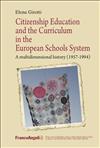
Citizenship Education and the Curriculum in the European Schools System
A multidimensional history (1957-1994)
The present volume examines the European Schools system focusing on the citizenship education they promote and their curriculum from the late 1950s to the early 1990s. A literature review is presented to understand how previous research has described these Schools and their sketched image, which - in the author’s view - is fairly static and accompanied by a value judgement. The volume goes through the prescriptive level of the curriculum of the European Schools in an attempt to disentangle the entanglements and retrace the national and international elements and influences that have contributed to its constitution.
cod. 11583.2

Città a meno del piano
L'indifferenza delle strutture urbane alla pianificazione
Il volume analizza il fenomeno urbano da diversi punti di vista, ed evidenzia l’inadeguatezza attuale e la difficoltà del piano regolatore di essere strumento capace di guidare l’evoluzione della città, come mostra l’analisi di alcuni casi studio.
cod. 1862.147
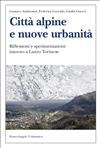
Città alpine e nuove urbanità
Riflessioni e sperimentazioni intorno a Lanzo Torinese
Come si (ri)definisce oggi l’alpinità di una città e qual è il ruolo delle città alpine dentro un sistema urbano montano multiscalare e panalpino? Possono essere le città alpine il luogo della sperimentazione di nuove urbanità? Nel volume si vanno a delineare queste questioni chiave che caratterizzano le città alpine, al fine di costruire politiche e progetti in grado di valorizzare il potenziale che esse stesse posseggono.
cod. 11862.4
The theoretical-political conjuncture which we find ourselves in is saturated with failures, programs, supply and demand, and to beat a dead horse rights. To speak briskly on a right (or rights) to the city is to became aware of their enlarge-ment and complexity, legal basis and symbolic valence, and, surely, real costs be-sides promised benefits. The increasing expectations syndrome corresponds, on the one hand, to what is probably a situation of social congestion, on the other, to the tendency to overestimate the ability of the urban, economic and political sys-tem to know and thus to meet the demand for city. The urban experience in the crisis of modernity has dismantled theoretical truisms and become familiar with the emergence of disorder, propeller of social change in directions that are not al-ways clear. In this framework, the city’s complex and disorderly organization fu-els the search for bargaining tools for the city’s governance and for attaining the three ambitious ‘e’s: efficient, effective, and economical choices and strategies which make the urban promise’s objectives possible or more attainable. The con-nection that must be constructed among choices, strategies, and objectives pres-ents itself as the organizational problem, while the decision and its rationale are continuously relativized in the light of cost-benefit calculus. This happens today as in the past, but with a different conception of responsibility to the future through the production of choices, polices, and plans that are rational, not in themselves, but in relation to a determinate, contextual objective of effectiveness, adaptiveness and perhaps even urban justice.