RISULTATI RICERCA
La ricerca ha estratto dal catalogo 105488 titoli

Experiences as a visiting professor brings opportunities to re-frame a personal research track, comparing and taking advantage from a different point of view. The author proposes an experience in which he reviewed his recent reflection about places, landscapes and public spaces of the urban project from the ‘mirror’ of nature. Immerse in sustainability objectives, nature is proposed as a tool and as a source of meaning for urban regeneration, conceived like a main strategy in planning. The broader understanding of existing contributions about relationships between city and nature can teach something relevant as well as the comparison with different sensitivities through this issue in several cultures and planning approaches. Therefore, an abroad experience, supported by a multicultural audience of young planners, accelerates this learning and reflecting process.
This article offers some reflections on sustainability in Kolkata, Indian city characterized by a steady increase in population, poverty and violence. It is argued that the key issue is not the continuous increase in population, but how to square the circle between, on the one hand, social justice and the right at a decent standard of living and, on the other, environmental sustainability and the availability of resources.
This article discusses how, in an African city - Cape Town - the African Centre for Cities has attempted over the last six years to develop a research method and facility able to respond to a series of pressing problems, by combining methods of scientific research with a deep immersion in the field of urban practices. The article critically explores the assumptions and first results of this experience and then discusses the dialectical tension which binds practices - and the search for increasingly more precise and effective tools for intervention - to the need to bring complex forms of the comprehension of reality into play which, in the conflictual and contradictory context of Cape Town, can only emerge from careful theorisation of the reality.
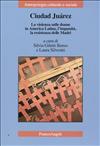
Ciudad Juarez
La violenza sulle donne in America Latina, l'impunità, la resistenza delle Madri
Il testo, prendendo spunto dai numerosi casi di femminicidio verificatisi a Ciudad Juárez, fornisce un panorama sulla violenza in Messico e in altri paesi latinoamericani, intrecciando antropologia, sociologia, letteratura, testimonianza diretta, medicina legale, diritti umani. Chiudono il testo la voce delle vittime e quella delle Madri (di Plaza de Mayo e dell’organizzazione Nuestras Hijas de Regreso a Casa) che continuano a combattere la violenza, affermando la verità dei fatti e proponendo un nuovo modo di agire e pensare.
cod. 62.69
Nel lavoro si analizza il rapporto tra l’efficacia dei progetti di Civic Crowdfunding e l’attrattività del territorio. L’indagine, condotta attraverso lo studio di due importanti piattaforme di Civic Crowdfunding, è stata effettuata attraverso un’analisi statistica di regressione lineare e multivariata OLS. Si è così verificato, su un campione di 144 progetti di Civic Crowdfunding, la presenza di una correlazione positiva tra l’efficacia dei progetti e l’attrattività del territorio, da un lato, ed il numero dei finanziatori, dall’altro. Sembra emergere, invece, una correlazione negativa con il numero dei progetti presentati. Il lavoro mostra l’importanza e la valenza del territorio attraverso la risposta data dai finanziatori aderendo ai progetti di Civic Crowdfuding, a dimostrazione dell’importanza che va assumendo questa particolare tipologia di investimento per lo sviluppo sostenibile del territorio, in linea con la tendenza, da parte dei cittadini, ad esprimere una maggiore volontà di partecipazione alla costruzione di città e territori migliori.
The issue of illegitimately appropriated pieces of art is very relevant for Italy, whose artistic patrimony is one of the largest in the world. This paper presents a project for improving the protection and retrieval of stolen art, based on the employment of a co-production perspective, engaging different actors and sectors in the process, and on the use of civic crowdfunding as a co-financing and social marketing tool. Thus, citizens take an active role in the co-creation of public value, as highlighted by Esposito et al. (2015), who find a strong link between social interaction, the aforementioned co-creation of public value, and the success of civic crowdfunding projects. Civic crowdfunding can be employed as a new financial tool for the enhancement of social inclusion and civic participation and engagement, with the perspective of fostering cooperation and collaboration between all sectors of society.
This article focuses on the link between admission policies for non-EU citizens in Italy and models of integration, and explores, in particular, the distinctive characteristics of the Italian civic integration experience and the Integration Agreement, that was introduced to the country’s legal system with the "security package" in 2009 and implemented by presidential decree 179/2011. In particular, the article looks at the legislative and procedural developments of the Integration Agreement, highlighting the stratification over time of the legislative output and the changing political and communication environments. Starting from the Plan for safe integration in 2010, a policy paper that defined the Italian integration model, we shall focus on three issues: the governing of human mobility and the establishment of the model of civic integration; the multilevel governance of integration processes, with the allocation of territorial resources; the involvement of migrants in production that is "active" and "worthy" of social citizenship. The integration of non-EU foreign citizens, which is promoted and implemented by the Plan and by the Integration Agreement, alludes to a process of adaptive and compulsory learning, for the purpose of the subjugation of foreign citizens without any active participation on their part. A complex computational system (Register of adherents) measures credits and debits ("points-based residence permit"), thus evaluating foreign citizens’ adherence to the Italian ethical, civic and linguistic her-itage and the conformity of their social conduct. In this way, the stay in Italy and social inclusion of foreign citizens is governed and achieved through the oxymoron of a "unilateral contract" and as a "rewarding" device of social governance.
Il saggio propone un’analisi approfondita delle modalità con cui le organizzazioni della società civile (CSOs) definiscono il loro ruolo all’interno del sistema politico dell’Unione Eu-ropea (EU) e contribuiscono al cambiamento democratico aggregando una gamma ampia di domande politiche, anche grazie allo spazio accordato dal cosiddetto ‘dialogo civile’. La no-stra ipotesi è che la European Women’s Lobby (EWL) abbia ricevuto in questi anni da alcuni organismi dell’UE, in modo particolare Commissione e Parlamento e dalle women’s policy agencies di derivazione di questi, un livello significativo di legittimazione e di riconoscimento della propria expertise politica su questioni sempre più aderenti all’agenda internazionale sui diritti umani delle donne. A questo proposito pensiamo che l’adattamento progressivo della EWL al policy framework dei diritti umani costituisce il criterio fondamentale per l’attuale lavoro di advocacy e di lobbyng in seno all’UE.
Civilisation, laicité, liberté.
Francesco Saverio Salfi fra Illuminismo e Risorgimento
Presenza immancabile nei circoli culturali più esclusivi di Napoli, affiliato alla massoneria fin dagli anni giovanili, Salfi (1759-1832) fu protagonista tra i più vivaci del giornalismo democratico cisalpino ed esponente di punta del teatro patriottico e, nel 1799, fu nominato honoris causa segretario del governo provvisorio della Repubblica Napoletana. La sua vasta produzione letteraria mostra un intellettuale instancabilmente impegnato nella battaglia per la conquista di irrinunciabili diritti civili e politici e per la creazione di un’Italia libera e democratica.
cod. 303.37
In this article, I analyse the implication of the spread of videoconferencing for prisoners under pre-trial detention as a technology embedded in a process of civilising punishment by bureaucratising criminal procedure. This is specifically examined through a series of letters from Italian prisoners ‘engaged in struggles’, held in maximum security from 2006 to 2020. From a situated perspective, the letters describe videoconferencing as a way of disembodying and recoding the space-time of the prisoners, reducing them to a simulacrum: a series of images, sounds and glances caught by cameras and microphones. This technology ensures, through a both material and virtual geographical solution, efficiency, and security but at the cost of increasing the distance between the judge, society and the accused.

Civiltà contadina e lotte operaie.
Quarant'anni di sindacalismo nel Mantovano (1960-2000)
cod. 1792.17

Civiltà contadina e lotte operaie
Sessant'anni di sindacalismo nel Mantovano (1900-1960)
cod. 1419.1.7


Civiltà e culture.
Lineamenti di antropologia
cod. 62.53