
Restauro architettonico
Padri, teorie, immagini
cod. 491.4.1
La ricerca ha estratto dal catalogo 105322 titoli
Padri, teorie, immagini
cod. 491.4.1


This paper critically explores the relationship between the history of modern architecture and restoration of the modern, identifying connections and discrepancies between the contexts of the two disciplines. It finds the cause of the latter in the unstable structure of the history of modern architecture, which is changing rapidly from many points of view. It highlights how this situation can easily lead to problems and controversy over the restoration of the modern and especially over the specific conservation techniques designed to maintain its authenticity. Two famous images of Walter Benjamin are used to quickly underline the contradictions in which restoration may fall, those of the angel of history and of the pearl diver, taking them as a historical paradox. The purpose is also to underline the questions which accumulate around the history of the tradition of the modern.
There is no profound difference between restoration and design because each restoration is a design, although of a special kind. In this case the design is not an independent operation because the ‘system of rules’ intrinsic to the building in question must be identified. Reference to generally acclaimed instances in restoration of the modern allow an architect to relate more closely to this system through an analysis of the formation of the original design, by means of an investigation which clearly assumes the traits of objectivity and communicability. In this manner, the designs establish a close dialogue with every single building, in the sense that each time they interpret the principles of the building in order to address the questions of degeneration, change of use and possible replacement or reconstruction of missing parts which may be in contrast with the original building.
Il lavoro è diviso in tre parti. Nella prima si fa una analisi della situazione storica dei servizi in Italia, rimanda alla creazione e allo sviluppo dei servizi interrogandosi sui modelli culturali fondanti e come questi sono cambiati nel tempo. Nella seconda parte si descrive l’esperienza, durata 5 anni, di un laboratorio sulla gruppalità realizzato nell’area fiorentina e che ha visto la partecipazione di numerosi operatori, di formazioni varie, proveniente da numerosi servizi di salute mentale degli adulti e dell’infanzia-adolescenza. Nella terza parte si riportano alcuni passaggi di una seduta di un gruppo terapeutico che rimanda non solo alle tematiche del gruppo, ma che risuona anche per i cambiamenti istituzionali in atto: trasloco del CSM.

To rescue the built heritage of traditional houses that are disappearing quickly in rural China because of fast urbanization, one widely adopted strategy is to restore and transform them into a museum. Such restoration work often turns out to be confusing and sometimes disappointing, risking at producing fake heritage in the name of preservation. To explore how this risk is artificially generated, this paper takes the Chen house in Chongqing Municipality as an example and analyzes its conservation plan, which has been approved but not yet implemented. The author further discusses the negative impacts of this strategy by combining many cases that have been already restored by this means. Last, the reason for the wide adoption of such stylistic restoration is analyzed and a critical perspective is proposed.

As the use of Restorative Justice (RJ) becomes more widespread in Europe so the interest in the application of restorative values, skills and processes to other settings continues to spread. Perhaps the setting in which there has been most interest in recent years is in schools. Both authors of the paper have been involved in this field for many years, as practitioners, trainers, developers, writers and researchers. Both share case studies from their own experience in Finland and in the UK respectively. In Finland the use of school mediation is set within the wider context of the Finnish commitment to offering mediation to all Finnish citizens. In the UK there is not this national commitment, nor a national infrastructure for offering mediation and other restorative responses. However certain schools lead the way in their commitment over many years to transforming the whole school culture and the way both adults and young people interact and relate with each other on a daily basis.
Restorative justice (RJ) in Europe is a diversified landscape, but some main lines of development can be distinguished. Victim-offender mediation is by far the most dominant model of RJ applied. Conferencing is less present and peacemaking circles only exist in an experimental form. The offer of mediation is often only made in the pre-trial stage of the criminal procedure and in case of less serious offences. Nationwide availability stays rather the exception than being the rule. This means that RJ plays a rather limited role in criminal justice overall despite the encouraging results of empirical research. The paper formulates different objections to the limitation of RJ as a diversion method for minor offences. If one wants to develop RJ as a response to the needs of the parties most concerned and not exclusively as an interesting tool for the criminal justice system, it is more than logical to offer RJ pre- and post-sentence and for all types of offences. Different European countries show that this can be done successfully.

cod. 1021.100

Excel in sales with sport strategies
cod. 1060.232
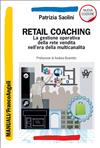
La gestione operativa della rete vendita nell'era della multicanalità
Un volume che si propone come guida per le organizzazioni Retail nel passaggio dall’attuale era multicanale (da una parte i negozi fisici e dall’altra l’e-Commerce) a quella del Commerce, dove la differenza tra fisico e digitale non avrà più ragione di esistere e la presenza del negozio ubiquo e pervasivo sarà ritenuta normale consuetudine. Il metodo del Retail Coaching ottimizza il ruolo dello staff di vendita, allineandolo ai nuovi diktat della cultura convergente, dove la customer experience vale di più dell’acquisto in sé.
cod. 1060.191
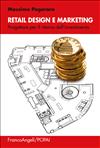
Progettare per il ritorno dell'investimento
Un testo unico nel suo genere! Mostra in che modo un’azienda debba prepararsi prima di approcciare un architetto per la progettazione di un punto vendita. Quali domande farsi prima di iniziare e come arrivare a realizzare un punto vendita che sia esteticamente piacevole e funzionale, nuovo e accattivante, ma che soprattutto serva allo scopo per cui è stato creato.
cod. 1060.253